Balkans

Unusual Pairings At Urban Union – Part 1

2 January 2013

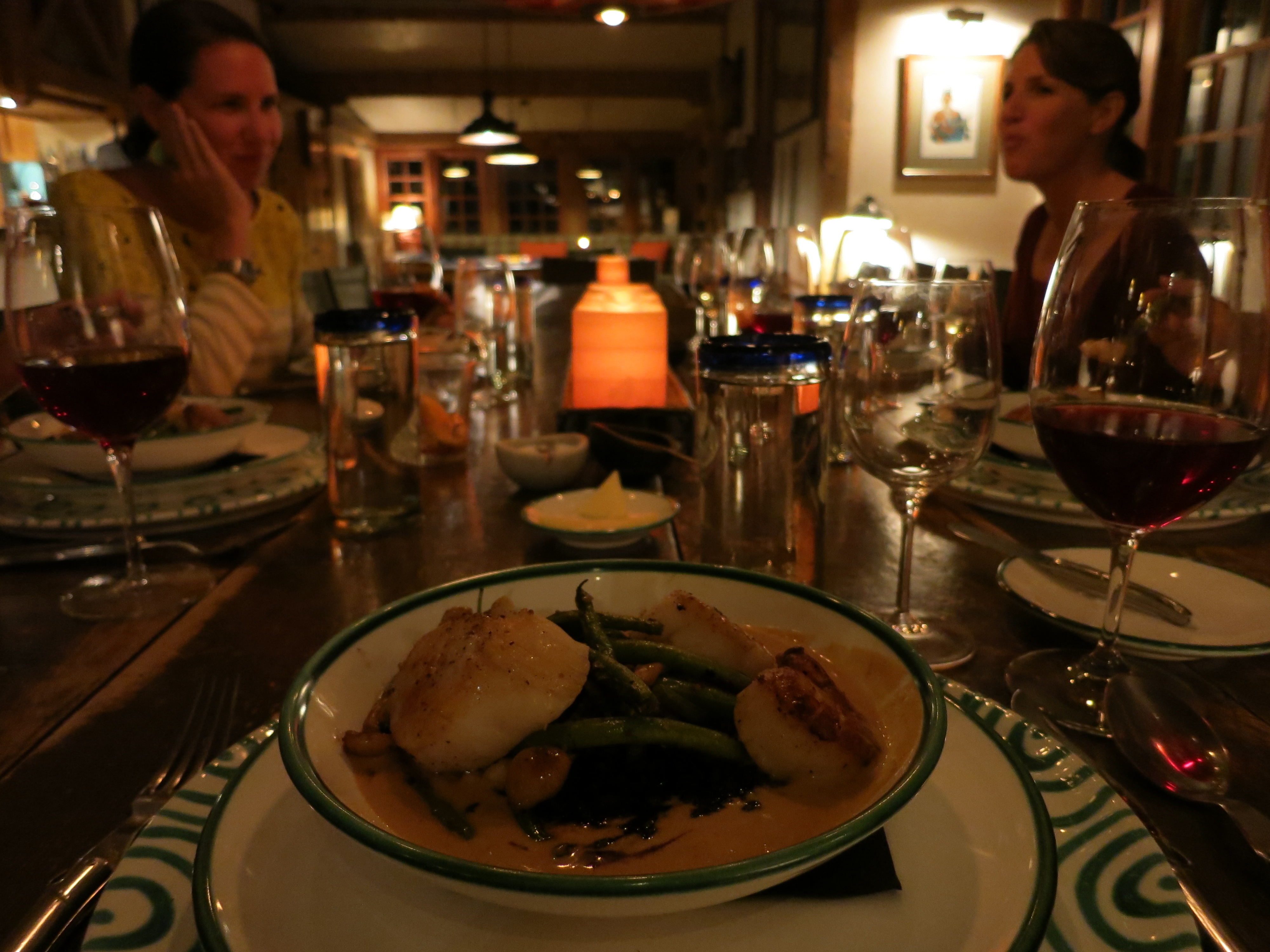
Chef de Cuisine Joshua MarrellEvery now and then, an invitation to attend a special dinner will waft my way, and though I do my best to avoid overindulgence (ahem), I feel it is my bloggerly duty to accept whenever possible. And so,  immediately following my office’s Christmas party, at which much pasta and red wine was consumed, I headed to Chicago’s Little Italy neighborhood, home to cozy and stylish Urban Union.

A handful of other food/wine bloggers gathered at the communal Chef’s Table, “where diners are served customized and unique creations, along with expertly selected wine pairings by the two sommeliers on staff,” according to the invitation. I felt a bit apprehensive, hoping that the pairings would be unusual enough to suit this blog, but as soon as I walked in, I knew it would work out just fine. A large chalkboard listed the “Wines on Tap,” starting with a Greek Moschofilero and a Californian Arneis. Yeah!

We started with a relatively conventional but undeniably delicious pairing of sake and ahi tuna sashimi with ponzu, basil and almonds. The Narutotai Ginjo Namagenshu, an unpasturized, unfiltered sake that continues to condition in its can, tasted fruity and a bit yeasty before driving to a clean, spicy finish. Paired with the sashimi, it seemed surprisingly less spicy; it became smoother, duskier. (You can read more about sake here.)

Domaine GiachinoThings started to get more unusual and exciting when General Manager and Sommelier Andrew Algren brought out the next bottle, a 2009 Domaine Giachino Abymes “Monfarina”.Very little wine escapes from France’s Alpine Savoie region, so I always feel delighted when I have the chance to taste one. This wine comes from the Abymes cru, about 100 kilometers south of Geneva, Switzerland, and it’s made with Jacquère, a white variety obscure to us but relatively common in Savoie. The wine smelled of rich green apples, and it tasted light-bodied and rather tart. The acids cried out for food, and a delightful winter beet salad with pancetta chips mellowed them nicely.

Chef de Cuisine Joshua Marrell kept things seasonal with his next course, a lush sunchoke purée topped with roasted sunchokes and sunchoke chips. Its deeply satisfying flavor worked marvelously with Algren’s most daring pairing yet: A 2011 Tikveš Rkaciteli from theSunchokes pureed, roasted and in chip form Republic of Macedonia (not to be confused with the Greek region of the same name). If you’ve encountered the incredibly ancient Rkaciteli variety at all, it was probably spelled “Rkatsiteli” and it probably came from Georgia (the country) or perhaps New York. It’s the most widely planted variety in the ex-Soviet republics, which isn’t necessarily a ringing endorsement, but it can make some excellent wines.

Macedonia, for its part, has a climate “extremely favorable to vine cultivation,” according to The Oxford Companion to Wine, and I was excited to see what this little country would do with one of the world’s oldest wine varieties. The Tikveš Rkaciteli fascinated me with aromas of bright pear and a bit of tar. It proved to be very acidic, oily and minerally, which sounds terrible, but I found it oddly enticing. The rich sunchoke dish balanced out the acids, making the wine rounder and fuller.

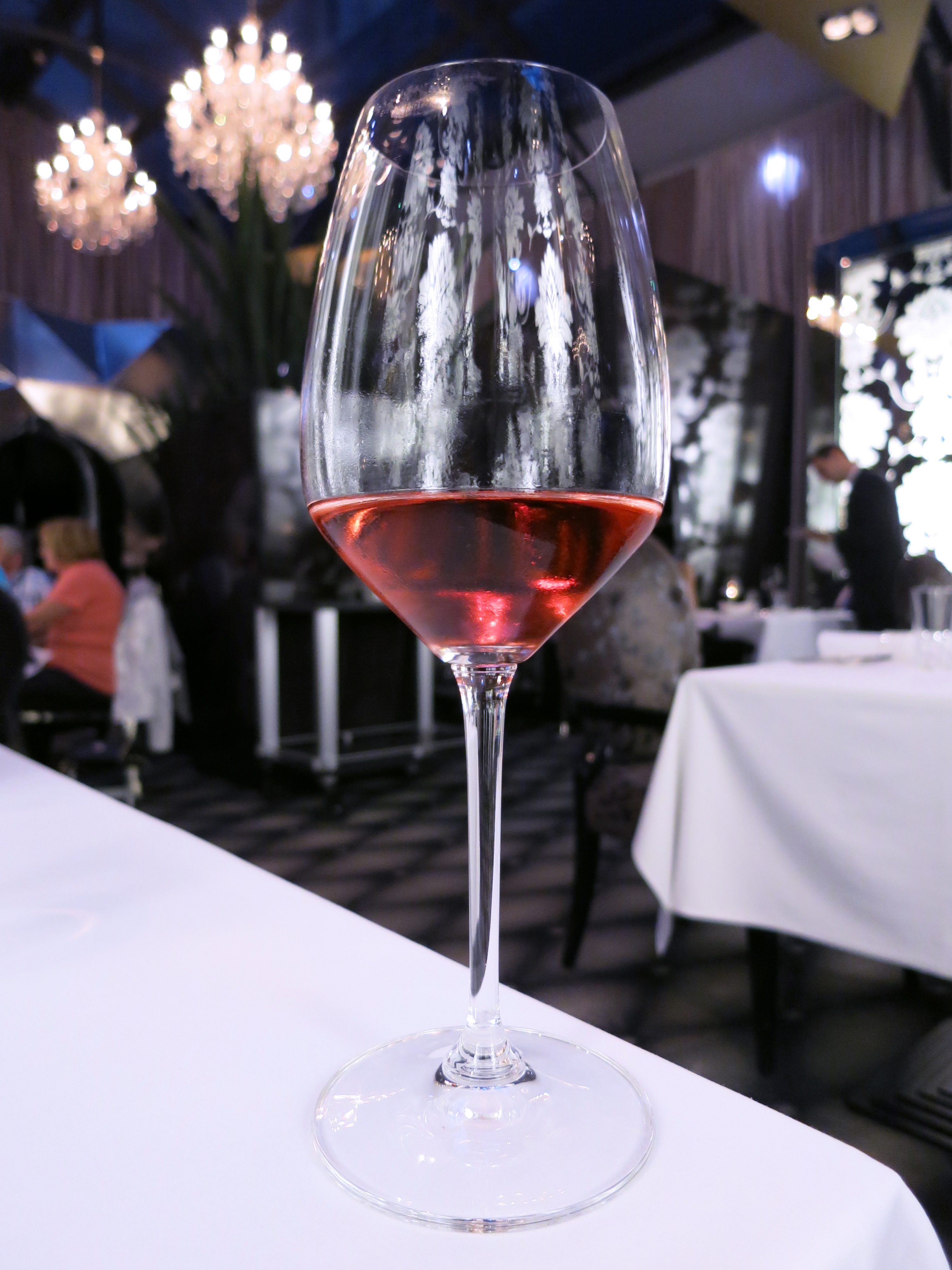
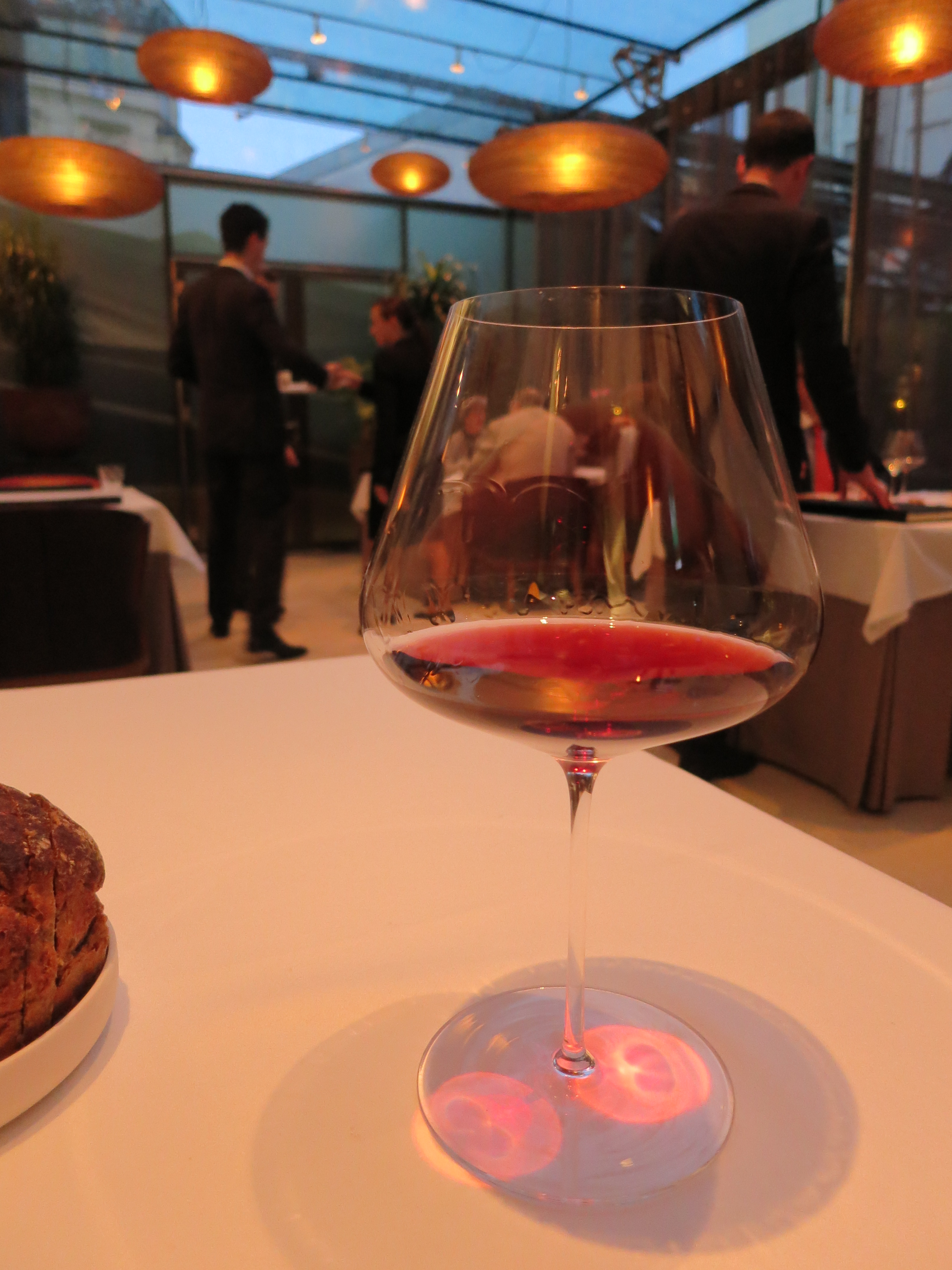
Up Next: The meal continues with an unexpected rosé and a wine that tastes like “grabbing a handful of the French forest floor and chowing down.”

Urban Union on Urbanspoon

Share

The Tasting Room – Part 1

3 March 2012

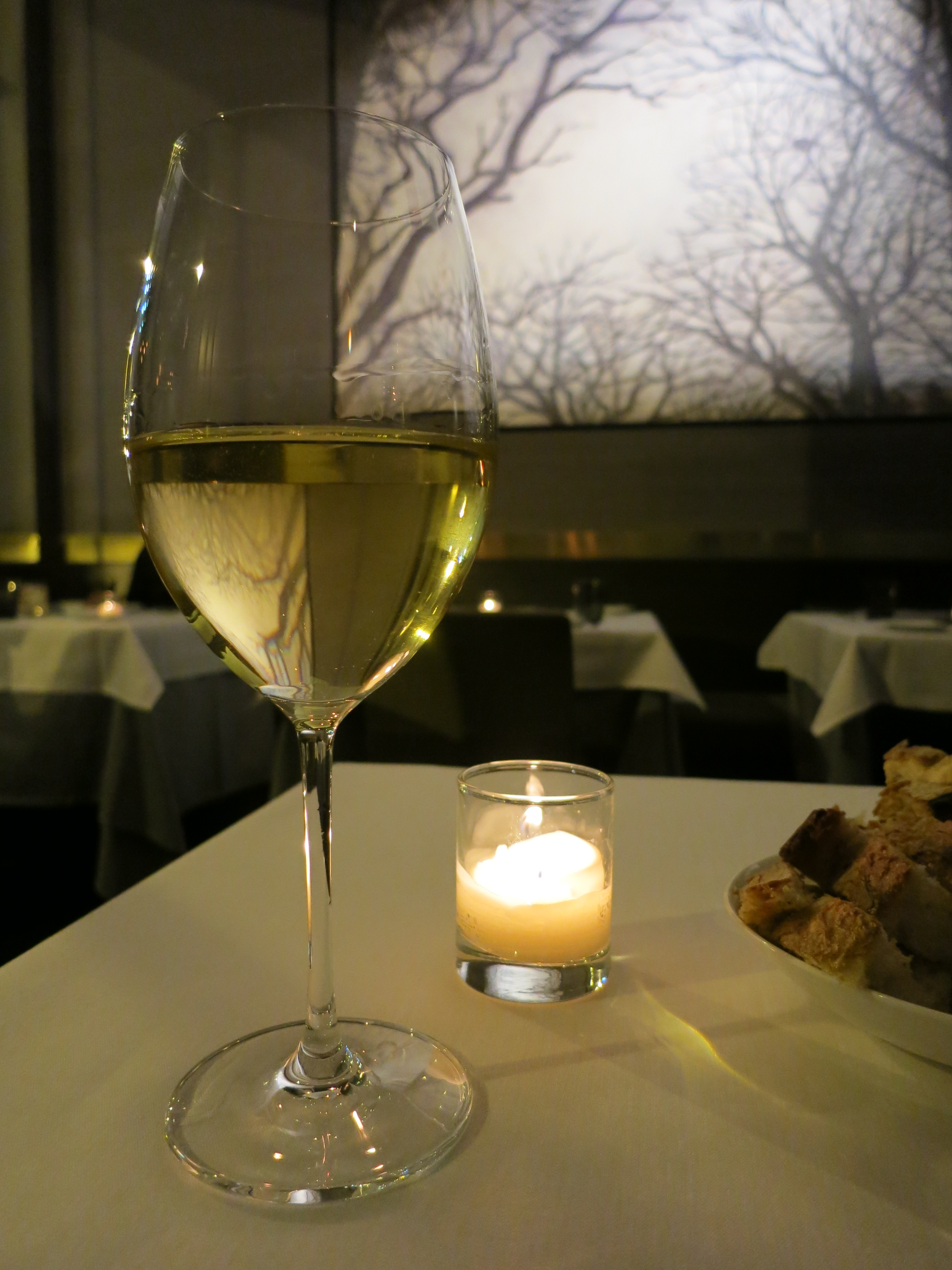
We Chicagoans are blessed with an array of fine wine bars, such as In Fine Spirits, Webster’s and Avec. One of my favorites, The Tasting Room, boasts not only an intriguing by-the-glass wine selection, but also beautiful views of the city’s skyline. On my last visit, it was the Sears Tower I contemplated out the second-floor windows, not the Willis, so a return trip was certainly long overdue.

Some old friends and I met up on a clear Thursday evening, arriving early enough to score a plum table by the windows. I perused the wine list, planning my strategy for the evening. A number of unusual and obscure options tempted me, but there was no question what my first drink of the evening would be: a non-vintage (NV) Eric Bordelet “Poire Autentique” from France’s Pays d’Auge region (part of Normandy). This sparkler comes from pears, not grapes.

Monsieur Bordelet, a former sommelier, presides over bio-dynamically farmed orchards of heirloom pear and apple trees, some of which date back to the 18th century. As many as 15 different kinds of pears go into this light yellow/green sparkling cider, which has a mere 4% alcohol content, making it quite easy to drink. Its powerful aroma of ripe, golden pears sucked me right in, and I was impressed by the elegantly tiny bubbles (though there were so many of them as to make it almost foamy). It tasted sweet, acidic and, of course, peary, but the cider finished surprisingly dry. $5 for a three-ounce pour or $10 for six.

I also couldn’t resist trying the 2010 Verus Furmint from Štajerska, also known as Slovenian Styria. I’ve long had a fondness for Slovenian wines, and Slovenia, for that matter, but this glass turned out to be a bit of a disappointment. The Oxford Companion to Wine calls Furmint a “fine, fiery white grape variety,” but this fruity, tart wine felt rather flabby, with a watery, slightly chalky finish. It livened up nicely with food, but all in all, it seemed to lack structure. I may have sampled a bottle that had been open too long — noted wine critic Jancis Robinson lavished praise on the 2007 Verus Furmint in this article, which also relates the fascinating story of the company. $5.50 for a three-ounce pour, $11 for six.

Some delicious reds would soon overshadow this small disappointment, but that’s for another post…


Share

A White Delight From Istria

15 October 2011

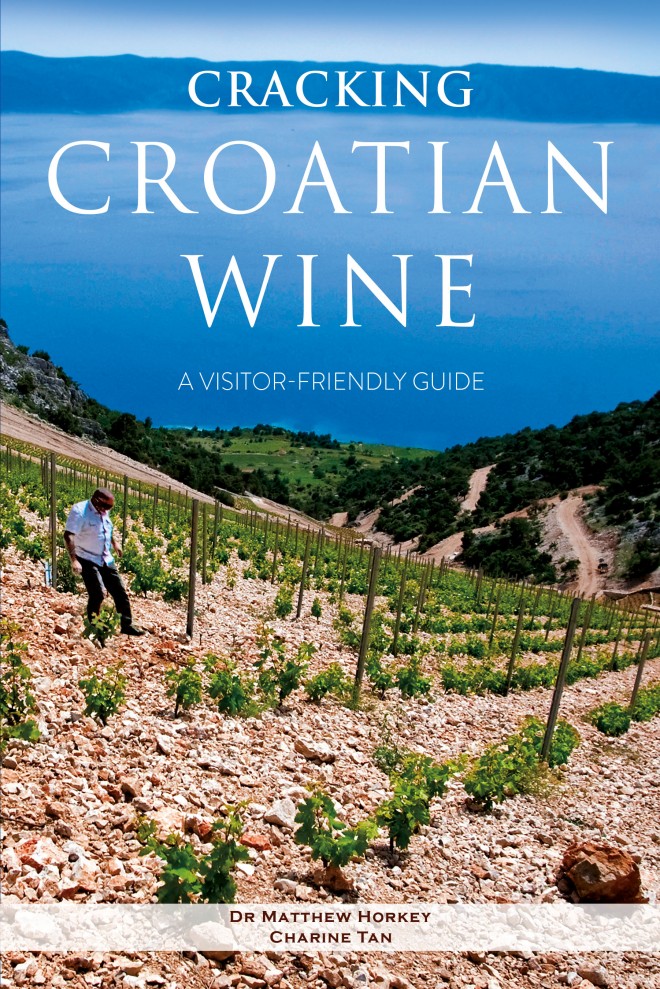
The World Atlas Of Wine asserts that Croatia is “a country full of original, if elusive, rewards…” It helps then, to have someone like Sasha of the distributor Tasty Wine Company separate the rubies from the garnets. He turned me on to an Istrian winery called Piquentum, which makes some fascinating stuff.

Back in May, I wrote about my experience with the Piquentum Teranum in this post. Though clearly well made, this wine simply wasn’t to my taste (more an indication of a flaw in my palate than in the wine, surely). I let the other bottle of Piquentum wine, a 2009 Istrian Malvasia, languish on my shelf for months thereafter.

It was worth the wait. This wine was most certainly to my taste.

(more…)

Share

A New Frontier – Part 4

17 June 2011

Our explorations of Serbian drink were not confined to wine. Mr. Goran Sevic of importer Vino et Spiritus brings a number of spirits into the United States, including loza (Serbian grappa), brandy and slivovitz. (You can read a previous post about slivovitz here.)

I briefly felt concerned that hard alcohol might not agree with my stomach, still recovering from a bout of food poisoning, but after tasting six wines, some sremska sausage and a stalk of green garlic, I decided to just go for it.

(more…)

Share

A New Frontier – Part 3

14 June 2011

In addition to the wines from Ivanović and Botunjac, which come from the Zapadna Morava region of Serbia, we tried two wines from the town of Vršac in Banat. This northeastern wine region (once the largest in Europe) has produced wine since at least the 15th Century, and likely much longer. Vineyards decorate the town’s 1804 coat of arms, as does a sword flinging a bleeding, severed head. Clearly this is a wine region to be reckoned with.

(more…)

Share

A New Frontier – Part 2

11 June 2011

After tasting two unique and delicious Serbian varieties, I was excited to see what some of this country’s most thoughtful winemakers could do with more well-known grapes. Could they hold their own on the international market?

The 2009 Botunjac ”Rasplet” Reserve Riesling certainly could. It seemed hardly believable that this dry, character-rich wine came from the same variety that ends up in Schmitt Söhne. A very pale gold, this Riesling had a rather alcoholic nose of apples, and rich, musky-dusky flavors of pear with a touch of resin and a whisper of yeast. I have never visited Serbia, but I have to imagine the rich, dry and stylistically unusual Rasplet to be very expressive of its terroir. It worked wonderfully with smoky, slightly spicy Serbian sremska sausage.

The vintner, Kosta Botunjac, certainly takes great care making his wines. He comes from a family of dedicated winemakers; while in a German POW camp in 1942, his grandfather Dragomir managed to send a postcard home with instructions for making the Pinot Noir. (more…)

Share

A New Frontier – Part 1

9 June 2011

Since the 2007 Jović Vranac currently stands as the highest-rated wine on this (newish) blog, I was delighted when the importer, Goran Sevic of Vino et Spiritus, invited me to taste more of his Serbian wine portfolio. It’s rare to find even one bottle of Serbian wine — wine regions like Banat, Timok and Zapadna Morava don’t leap readily to the tongue — let alone have the opportunity to taste several all together. Fortunately the food poisoning I’d experienced the day before the tasting abated, and I paid Mr. Sevic a visit.

We couldn’t be expected to taste all this wine on an empty stomach, a most hospitable Mr. Sevic declared, and he produced a beautiful board of Serbian sremska sausage, Serbian pancetta, Italian sausage, Jarlsberg cheese and slices of baguette. Unsure how my almost entirely empty stomach would respond, I started with a bit of baguette. Reassured by my gastric non-reaction, I sampled the first wine.

(more…)

Share

Drink It Now

13 May 2011

When traveling, I frequently buy a few bottles of the local wines and/or spirits, seduced by their unavailability in Chicago. Especially when the dollar was stronger, vinous ballast would accumulate in my suitcases until the handles buckled and the seams began to unravel.

My greatest triumph was to return from Italy with no fewer than 13 bottles of hooch divided between my checked bag and carry-on. It was January 2002 – a dollar bought 1.15 euros, and you could bring as much liquid as you damn well pleased onto the plane. Blessed memory.

Since then I’ve managed to bring my booze-buying addiction under control, partially through self-restraint but mostly through the depredations visited upon the U.S. dollar by noted economists George W. Bush and Barack Obama.  I memorably escaped from Burgundy — Burgundy — with just six bottles, and more recently, I returned from Vietnam with one lonely bottle of snake wine.

(To pack wine safely in your suitcase, I recommend slipping each bottle into three or four medium-thick socks. With my hard-sided luggage, I have yet to lose a bottle. …Knock on wood.)

(more…)

Share

Neither Welsh Nor Riesling, Part 2: Spring Green

11 May 2011

In honor of spring, we feasted on a wonderfully green, satisfying meal of pearl barley risotto with zucchini, mushrooms and fresh basil and a side of roasted asparagus and ramps. To match, I searched for the greenest thing in my wine collection, which turned out to be a 2009 Iločki Podrumi Welschriesling.

The Iločki Podrumi winery lies on the right bank of the Danube near Ilok, the easternmost town of Croatia. Romans manning the local fortress likely maintained vineyards here, and wine certainly factored into the economy by the time the 15th-century “Old Cellar” was built. Capable of aging up to a million liters of wine, the Old Cellar reached the pinnacle of its fame when it supplied approximately 11,000 bottles of wine to the coronation celebrations of Elizabeth II.

(According to Decanter, William and Kate served Pol Roger Champagne at their reception, as I’m sure you’re all deeply curious to know.) (more…)

Share

Iron Maiden

9 May 2011

Many people think of Teran, when they think of it at all, as a varietal, which it is, except when it isn’t.

Officially, Teran can only be grown in iron-rich terra rossa, the karst soils found in specific sections of northeastern Italy, Slovenia and Istria. “Teran” grapes grown elsewhere are merely Refosco (or Refošk). Teran then, by definition, is not just a varietal but an expression of its terroir.

I’d sampled some Slovenian Terans when I visited a few years ago, and honestly, I didn’t like them very much. They may very well have been well-crafted wines, but the notes of iron simply didn’t agree with me. I feel the same way about Bleu, Stilton and Gorgonzola cheeses — however lovingly and artisinally made they may be, I can’t get over the moldy taste. It’s a flaw, I know, but what can I do?

(more…)

Share
Next Page »