The Fine Wines Of Temecula

2 February 2013
Comments Off on The Fine Wines Of Temecula
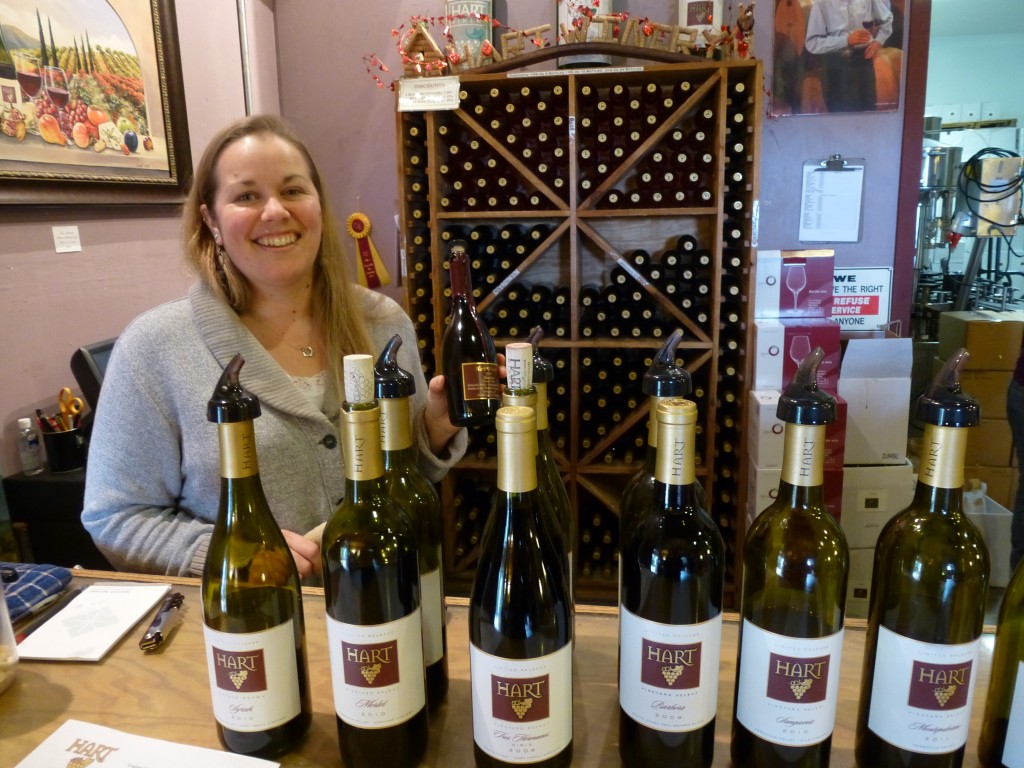
Kelli at Hart Family Winery

Kelli at Hart Family Winery

The AVA of Temecula north of San Diego had an inauspicious beginning. Vines weren’t planted here because someone thought, “Hey, this is a great place to make wine.” The vineyards were a marketing tool, used to lure prospective home-buyers! The Oxford Companion to Wine explains: “Beginning in the late 1960s, insurance company developers used vineyards as part of their sales pitch to urban-weary escapees from Los Angeles and San Diego.”

In spite of this remarkably unromantic beginning, Temecula has started to come into its own, and some vintners are crafting wines of real distinction. Because of cool breezes from the Pacific funneled through a gap in the mountains, it turns out Temecula vineyards can do a lot more than look pretty for suburbanites.

As I wrote in this post, Temecula’s tasting room experience still has some growing-up to do. A number of venues still gear themselves to birthday and bachelorette party groups looking more to get a buzz than experience beautifully made wines. But at some Temecula wineries and tasting rooms do focus on the wines, as opposed to getting drunk, and many of these are showing off some very fine wines indeed.

I started my second day in Temecula at Hart Family Winery, mostly because its tasting room opened at 9:00 a.m., an hour or two earlier than everyone else’s. I felt a bit apprehensive, I must admit, after the previous day’s unpleasantness, but Hart’s tasting room was small and quiet, and it offered tastings for half the price of Ponte. And the wines weren’t too shabby either!

2011 Roussanne: Rhône varieties seem to do well in dry, sunny Temecula, and this Roussanne was no exception. It had a green, juicy aroma, juicy fruit and acids, and it ended on a clean mineral note.

2011 Cabernet Franc Rosé: I’m a sucker for good rosé. This example was fruity and fun, with some lemony acids and a touch of stone. Works for me!

2011 Montepulciano: Temecula’s Italian varietals also tended to taste great, including this lovely little number. I liked its nose of earth and raspberries, its ripe red fruit and its food-friendly acids.

2010 Sangiovese: I thought for a moment that I might be in Tuscany when I sipped this brick-red beauty. It felt focused and earthy, with well-balanced acids and an irony finish.

2009 Tres Hermanos: This Rhône-style blend of Grenache, Mourvèdre and Syrah had tightly wound, plummy fruit and hearty tannins. It had me hankering for a bowl of ratatouille.

2010 Syrah: I didn’t detect too much bouquet here, and the wine felt a little tough. I bet it would benefit from some decanting or some additional age.

2010 Aleatico Port: I felt especially excited to try this port, made from the very unusual Aleatico variety. This grape, a red relative of Muscat, originated in Italy, where it’s grown mostly in Lazio and Puglia, according to The Oxford Companion to Wine. The island of Elba also exports a sweet red wine made from Aleatico, and the grape is “surprisingly popular in the central Asian republics, notably Kazakhstan and Uzbekistan,” the Companion notes.

I still don’t fully understand how this odd duck of a variety ended up in Temecula, but there it was. The port had a thrillingly rich, raisiny aroma and a beautiful dark magenta color. It started sweet and smooth, then moved to an intriguingly chalky midsection before finishing with a surprising blast of spice. Delightful!

There’s nothing like a good port right after breakfast. Feeling much restored, I set off towards my next tasting. It proved to be the complete opposite, in every way, from the craziness of Ponte.

Up Next: An unexpectedly private tasting at Wiens, some intense focus at Palumbo, and sipping amid the motorcycles with vivacious Marcello Doffo.
First Look: Temecula

30 January 2013

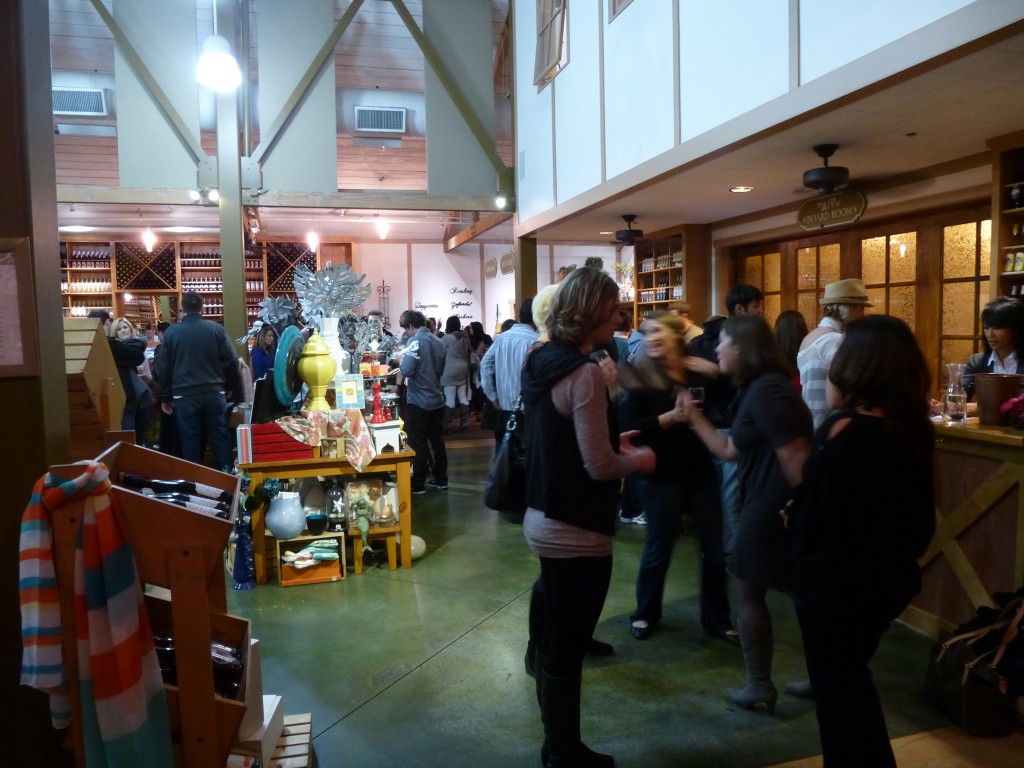
Ponte Vineyards' Tasting Room/Gift ShopYou probably won’t find a “Temecula” section in your wine shop, the way you might see “Napa/Sonoma” or even “Central Coast.” This wine country about an hour northeast of San Diego is just a baby, oenologically speaking, and it doesn’t have much of a reputation just yet. That might be a good thing. Because from what I’ve seen so far, if Napa is “Lifestyles of the Rich and Famous,” Temecula is more “Real Housewives of New Jersey.”

I’ve only been to one tasting room so far, that of Ponte Winery. I went on a Saturday, which is always a mistake in wine country, but my schedule allowed me little choice. The tasting room/gift shop was packed, but that wasn’t the problem — I expected a crowd. I did not expect the extortionate $20 tasting fee, however. I’ve never paid that much for a basic tasting anywhere, be it in Napa, Sonoma or BURGUNDY, for the love of Pete.

I suppose part of that fee pays for the glass I didn’t want to take with me, but most of it goes for the inexcusably large pours. I’m not usually one to complain about a slightly overfilled glass of wine, but if one drank all six “tastings” without spitting (no one in view spat a thing), one would be drunk. If the Ponte Winery tasting room were really interested in its patrons learning about the wines, portions would be much smaller and much cheaper. But perhaps Ponte Winery thinks its guests are just interested in getting a buzz before getting back in their cars? And perhaps they’re right.

Nor did the wines dazzle. Beyond a couple of standouts, most tasted just OK, and with most over $30 a bottle, they should have been pretty darn tasty. Here’s a quick rundown of what I sampled:

2011 Chardonnay: Aroma of burnt tire and wood. Light bodied, with watery fruit, limey acids, and a bit of stone and rubber at the end. $24

NV Vernaccia Nera: This one was really fun. A Lambrusco-like sparking red made with fruit from Italy’s Marche region, it tasted like red fruit, iron and jam. Weird, surprisingly complex and even addictive. I was tempted to buy a bottle to take home; it almost seemed worth it at $30.

2010 “Super T”: A Super Tuscan-style blend of Cabernet Sauvignon and Sangiovese. It smelled like earth and plums, and it tasted like dark red fruit with a bit of iron and spice. Light bodied and tasty, but I want more than that for $38.

2010 Zinfandel: Not much nose on this one at all, oddly enough. It felt tight, with ungenerous fruit and a relatively tannic finish. $35

2009 Syrah: The chocolate/raspberry aroma got me all hot and bothered, but when I took a sip, it fell a little flat. It just didn’t go anywhere — it was medium bodied, and just not very memorable. What a disappointment after that sniff! $35

2008 Zinfandel Port: I love a well-made Port, and this was a well-made Port. It had a temptingly rich, raisiny nose, and this time the flavor lived up to the smell. It had lots of jammy, chocolatey fruit, balanced by zesty acids and some tannins on the finish. Delightful! It was nice to end the tasting on a high note. $46

I’m trying out a few more Temecula wineries before I leave… Here’s hoping!

Update: Later that evening, in the bar of the Ponte Vineyards Inn, the bartender offered me a taste of the 2009 Ponte Vineyards “Angry Wife, made from a blend of grapes which is “never disclosed so please don’t ask,” according to the label. Now why couldn’t they have presented more wines like this in the tasting room? It smelled irony and red, and it packed a flavor whallop: lots of fruit, hefty tannins and a final kick of spice. Tasty! Don’t keep wines like this a secret, Ponte!

The Hearty Reds Of Toro

26 January 2013
Comments Off on The Hearty Reds Of Toro

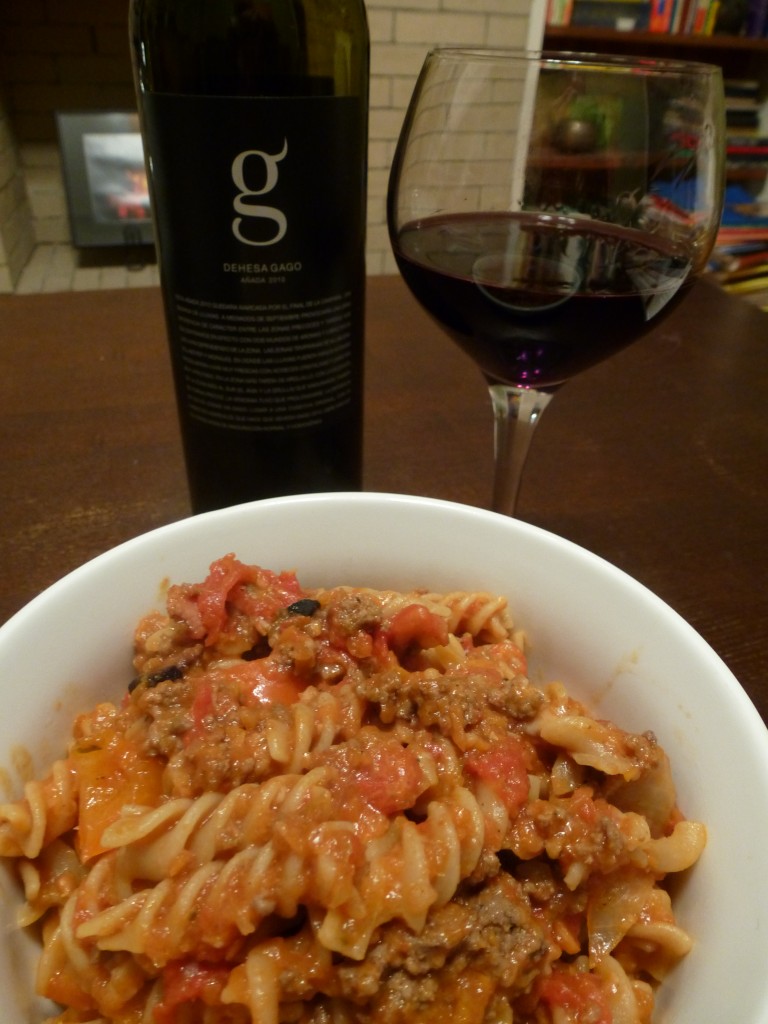
Toro paired with fusilli BologneseI remember the first time I had a wine from Spain’s small Toro region, which straddles the Duero River not too far from northwestern Portugal. My husband-to-be and I were in New York at a delightful tapas bar in the Village (the name of which is alas lost to history), and at the bottom of the extensive wines-by-the-glass list was a Toro. I asked the bartender about it, and he replied, “Oh, I love that one — if you like big reds, you should give it a try.” We each had a glass, and our memories are so fond of that evening and that wine that we served a Toro at our wedding reception.

This Denominación de Origen (DO) was established only recently, in 1987, and the Toro DO only gained international renown in the last 10 years or so. According to The Sotheby’s Wine Encyclopedia, “The Alvarez family of Vega-Sicilia fame had been purchasing land [in Toro] since 1997, and after this was announced in 2002, the floodgates opened, so that at last count there were 40 bodegas.” Sotheby’s goes on to say that “the battle for Toro’s true quality has only just begun,” but I say it’s producing some pretty darn tasty stuff already.

Part of the region’s success is no doubt due to what The Oxford Companion to Wine calls “severe” growing conditions, with dry, stony soils and high altitudes. Grapevines need to suffer to produce great wine, the common wisdom goes, and in this “wild and remote zone,” the vines surely suffer indeed. The local specialty, Tinta de Toro (a variant of Tempranillo), has adapted to the Toro terroir, and it produces wines of “exciting quality” according to Sotheby’s, and according to me as well for that matter.

It’s January in Chicago, and I was in the mood, as you might expect, for a big red wine. I browsed the Toro section at Binny’s and discovered that, as usual, most of the Toros were pretty pricey. I picked up a couple of bottles of the least expensive, a 2010 Telmo Rodríguez “Dehesa Gago,” recognizable by the big white “g” on its black label. It turned out $15 was quite a bargain for this beauty.

When I opened the bottle, I could immediately detect vanilla aromas, which intensified when I poured the deep-purple wine in a glass. Closer up, the wine smelled more like red fruit, iron and earth than vanilla. It felt focused up front — even a little tight — with flavors of vanilla and dark berries. At the back of the palate, however, it became almost rough, with hearty tannins, rustic power and some rowdy spice. It developed how I imagine a typical date in Las Vegas would. Paired with some Fusilli Bolognese, it became even more powerful and spicy.

This may not necessarily be the best Toro out there, but at $15, the Telmo Rodríguez “Dehesa Gago” took me on quite a ride. And if this Toro isn’t available at your local wine shop, try another one. I’ve yet to be disappointed by a wine from this newly discovered region.

SUMMARY

2010 Telmo Rodríguez “Dehesa Gago”:This tasty Toro starts smooth and then gets a little rowdy. Big fruit and significant tannins. A fun ride and a fine value. Chill in the fridge for 15 to 20 minutes before serving, and pair with red meat or strong cheese.

Grade: B+/A-

Find It: I purchased this wine for $15 at Binny’s on Clark Street.

Potentially Confusing Wine Terms

23 January 2013
Comments Off on Potentially Confusing Wine Terms

Wine, like many fields, has its own vocabulary. For some, that’s part of its appeal, and for others, it can feel intimidating. I must admit I use winespeak on this blog not infrequently, with the goal of adding precision to my descriptions. But some of these terms, as my mother recently alerted me, can’t even be found in a typical dictionary.

I thought, therefore, that it would be handy to have a quick glossary of some potentially confusing terms you’re likely to encounter when reading about wine:

Acids: As in citrus fruit, acids can give wine a juicy, mouth-watering quality, and they’re usually very important for making a wine food-friendly. I find they can take on different shapes and colors, like pointy limey acids, or round orangey acids, or bright lemony acids.

Brut/Extra Dry: Ages ago, some marketing genius in deepest France decided it would be smart to use these terms counterintuitively. A brut Champagne (or other sparkling wine) will be dry, and an extra brut Champagne will be even drier. An extra dry Champagne, however, will be on the sweeter side. It’s France — they like to keep us barbarian Americans on our toes.

Cuvée: This word is thrown around willy-nilly these days, and it’s sometimes used just as a synonym for “wine” when wine writers don’t want to use “wine” too often in a single sentence about wine. It usually refers to some specific subset of a wine, perhaps indicating different blends, for example.

Noble Rot: I suppose even a true marketing genius would have trouble making the botrytis fungus sexy. Noble rot can be quite desirable because it creates little holes in the grape skins, drying out and even shriveling the grapes a bit. This concentrates the sugars and flavors in the remaining juice, resulting in (ideally) marvelously deep, rich, sweet and lively wines. Sauternes and Tokai Aszú are two classic examples.

Tannins: In contrast to mouth-watering acids, tannins tend to dry the mouth. If you drink a wine and it sucks the moisture off your tongue, or (in extreme cases) feels like a mouthful of cotton, those are the tannins at work. Wines aged in stainless steel typically have fewer tannins than wines aged in wood, though the amount of tannins tends to be determined more by the grape variety and how much the winery used the stems, skins and seeds in the winemaking process. In any case, tannins help add structure and balance, and help keep a wine intact as it ages in the bottle.

Terroir: More and more, wine drinkers are seeking out cuvées– er, wines, which are expressive of their terroir. This French term doesn’t just refer to the qualities of the soil in which a vineyard is planted. It encompasses the entire microclimate of the vineyard, from soil to sunlight to rainfall to temperatures. Basically, terroir can be anything that gives a wine a sense of place. A single-vineyard wine should theoretically be most expressive of its terroir, as compared to a wine made from grapes grown across an entire region. It matters less whether a wine is a varietal or a blend of different varieties.

Variety/Varietal: Speaking of which, let’s talk about “varietal” versus “varieties.” I admit I confused these terms myself until relatively recently, and you’ll see them used incorrectly in all sorts of prestigious publications. Editors take note! A variety refers to the type of grape, such as Merlot, Chardonnay, or everyone’s favorite, Öküzgözü. A varietal wine is a wine made entirely (or almost entirely) from a single variety, and it should probably express the characteristics of that variety. Although “varietal” is technically an adjective, it’s also common these days to refer to a varietal wine as simply “a varietal.”

My goodness, well that’s enough vocabulary for me. Does anyone happen to have a glass of tannic terroir-focused extra-dry varietal something or other?

« Previous PageNext Page »