California Cocktail Roundup

16 February 2013

Let’s cleanse the palate after that Melvyn’s debacle, shall we? I had the fortune to sip a number of thoroughly delicious cocktails on my recent trip to southern California. Should you ever happen to find yourself in that chunk of the country — or more specifically, San Diego — here are three bars not to miss.
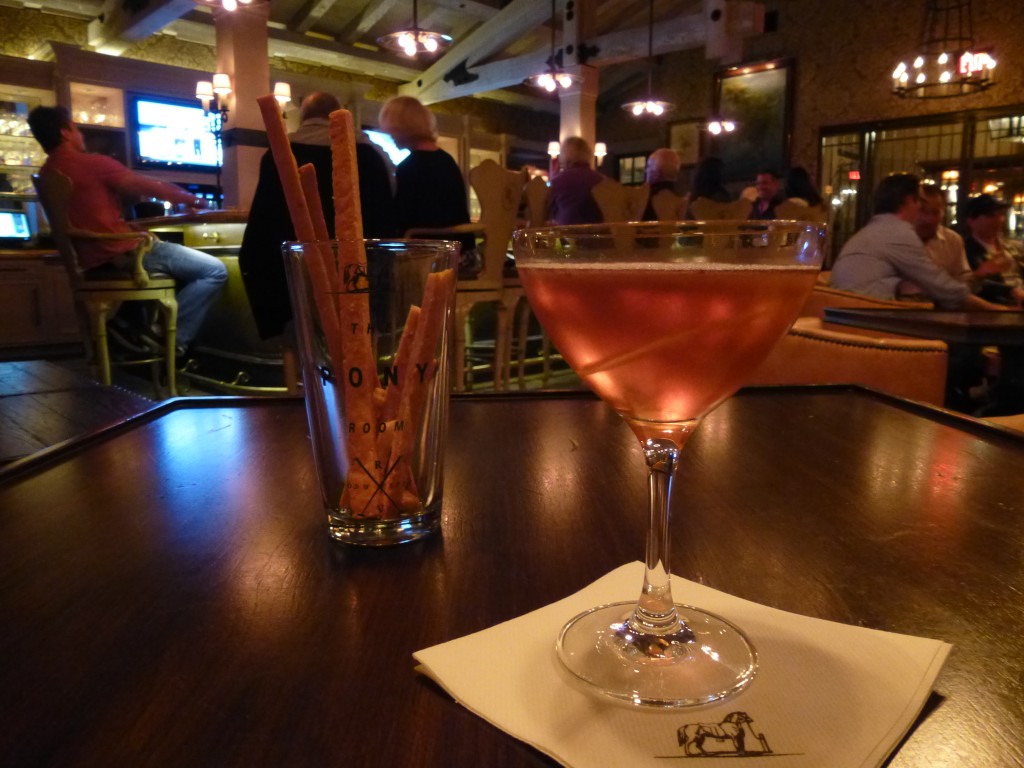
 

THE PONY ROOM

A Martinez in the Pony Room

This bar in the Rancho Valencia resort draws a wealthy crowd, a fact made abundantly clear to me as I watched the valet park my rental Ford Focus among the Maseratis and Bentleys. Nevertheless, it’s a friendly and lively place, and it has a relatively short but intriguing cocktail list including top-shelf spirits and house-made sodas.

I ordered a classic Martinez (above), which many hold up as the ur-martini. For a long time, it was very difficult to make this very old cocktail properly, because finding Old Tom Gin was nearly impossible. But this sweeter gin is back in fashion (at least somewhat), and well-stocked liquor stores now carry this relic from the 18th century.

The Pony Room uses Hayman’s Old Tom Gin, Dolin Sweet Vermouth, Luxardo Maraschino Liqueur (not to be confused with fluorescent Maraschino cherry juice) and Angostura bitters. The result was strong but very smooth, with some bitterness and then sweetness, with a surprising note of citrus. My server said that The Pony Room doesn’t sell many Martinez cocktails, which is a shame, because they’re both historic and delicious.
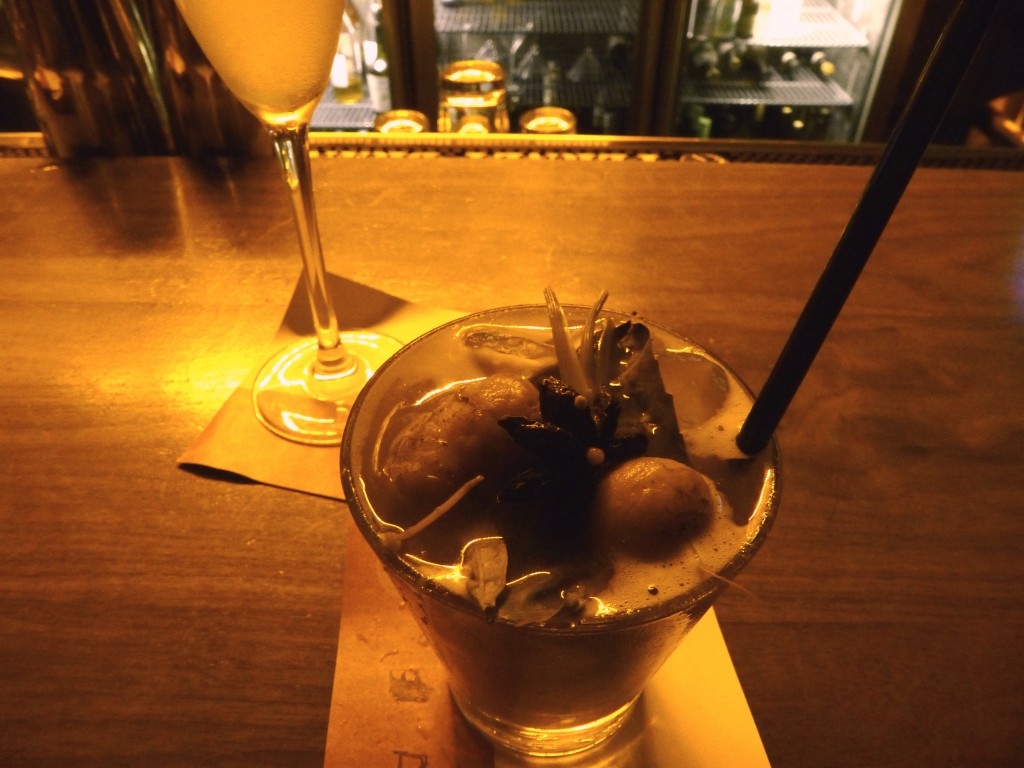
 

BURLAP

The Rabbit at Burlap

Just down the road from Rancho Valencia, in a rather unpromising-looking strip mall, is Burlap, a very happening restaurant and bar bursting with Asian exotica. A giant dragon dance costume hangs from the ceiling near the entrance, and an ornately carved wooden screen, perhaps from India, frames the back bar.

Here I tried a Rabbit, one of the dozen cocktails named after Chinese zodiac symbols. The menu describes it as “Pimm’s #1, house-made basil lemonade, pickled globe carrot,” and I have to admit it was the pickled carrot that sold me. Who wouldn’t want to try that?

The drink actually was even more complicated than it sounds, with star anise and basil leaves supplementing the globe carrot garnish. It was wonderfully fragrant, as you might expect with the anise sitting on top, and it tasted marvelously refreshing. Basil, then lemon, then something green and herbaceous, and a touch of something medicinal in the underbelly. The carrots were a deliciously sour and sweet counterpoint.
 

NOBLE EXPERIMENT

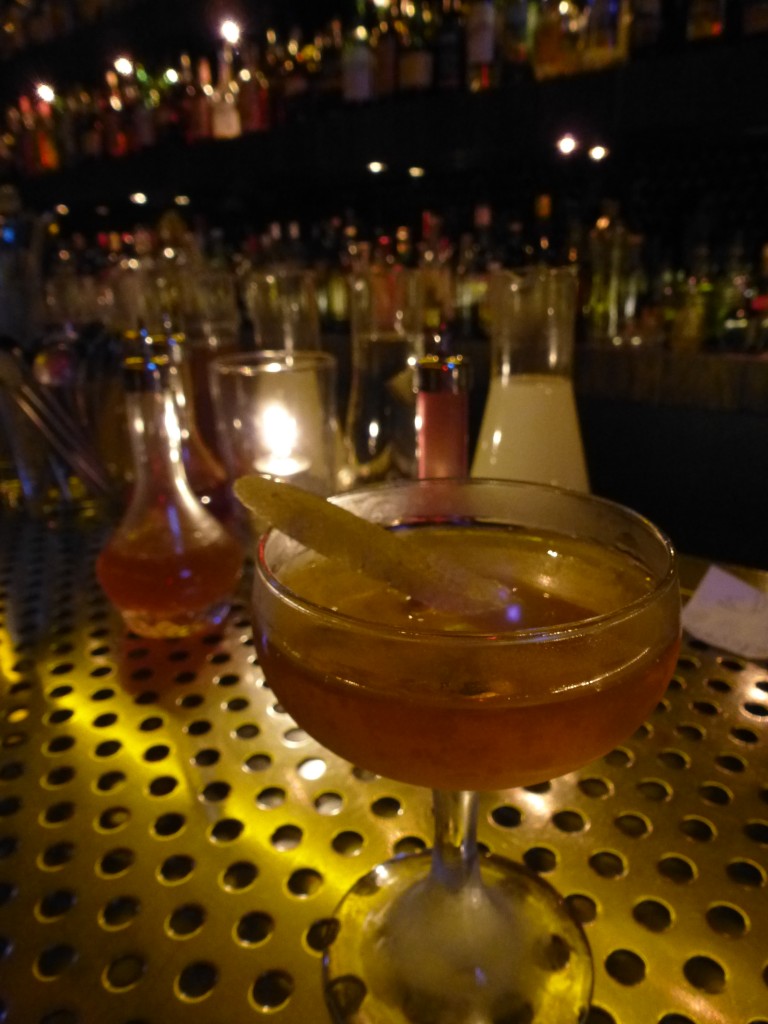
Amber Dream at Noble ExperimentThis speakeasy in downtown San Diego was my favorite bar of the trip. It’s a little complicated to get in — you need to make a reservation in advance (ideally, a week in advance), and you can only make that reservation by sending a text message to 619-888-4713. Once your reservation is confirmed, go to a restaurant called The Neighborhood at 777 G Street. Go to the back by the bathrooms, and you’ll see some beer kegs stacked up against the wall. Push on those, and you’re in!

The decor of gilt-frame old-master reproductions and gilded skulls feels rather louche, and the cocktails here are made with extreme care, as in Philadelphia’s Ranstead Room.

Bartender Anthony hand-cracked the ice for my Amber Dream (right), a classic cocktail that I must admit I’d never tried before. It contained Beefeater 24 (in which Beefeater steeps the botanicals for 24 hours, amping up the flavor), Carpano Antica (the sweet vermouth craft bars are going crazy for these days), Yellow Chartreuse (a French herbal liqueur), orange bitters and a strip of lemon zest.

This cocktail took a few minutes to make, and it was worth the wait. It started on a sweet note, but the flavor became more and more bitter. I love the smooth, round texture (achieved with lots of stirring) and the citrusy aroma from the zest. Delicious, complex, and positively delightful.

Also delightful, not incidentally, was the company. I had the pleasure of sitting next to a charming local couple, Ellana and Colin (below), and somehow we ended up chatting about everything from the difficulty of making friends to what it means to follow your dreams. The conversation proved surprisingly honest and open. Was it the drinks? The skulls? Who knows? Anyway, Noble Experiment — go there.
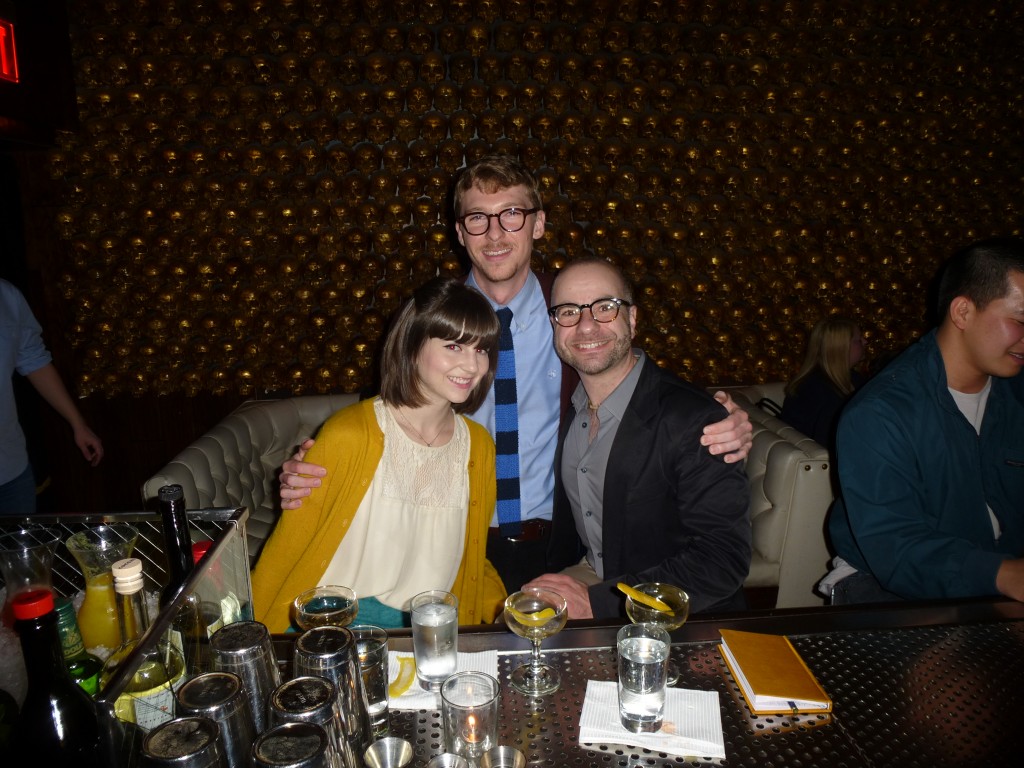
Cocktails with Ellana & Colin


Burlap on Urbanspoon

Top Temecula Wineries, Part 2: Palumbo

13 February 2013
Comments Off on Top Temecula Wineries, Part 2: Palumbo

Who knew I would have so much to say about Temecula? Don’t be fooled by the “Part 2” in the title. This is actually my fourth post about this unsung wine region north of San Diego, and I saved some of the best for last. Well, almost last. On the advice of the charming and startlingly young sommelier at the Ponte Vineyard Inn (geez, kids are learning about wine early these days!), I visited two of Temecula’s smaller wineries, Palumbo and Doffo. The intimate tasting rooms provided exactly the sort of wine-tasting atmosphere I like most: Casual, friendly and focused on the wine.

Should you find yourself in Temecula at some point, don’t miss these guys. First, Palumbo:

PALUMBO FAMILY VINEYARDS & WINERY

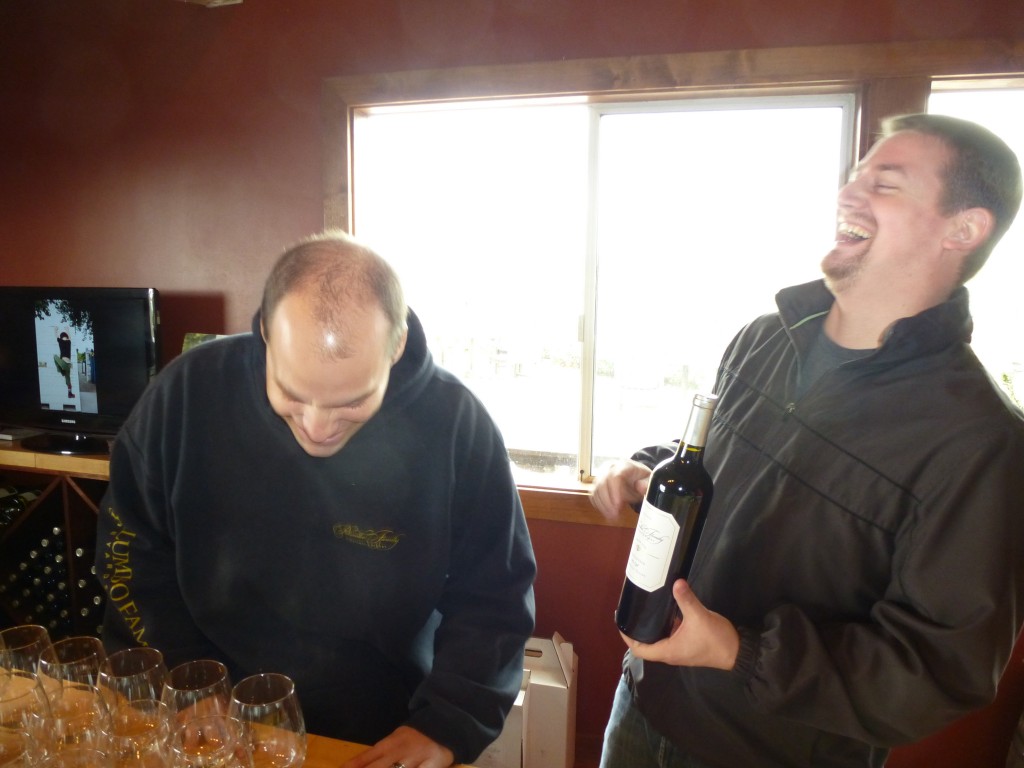
Matt and Joe at PalumboOn a quiet side road away from the big wineries along Rancho California, this winery was recommended by almost every Temeculan I spoke with. All the fruit for its wines comes from Palumbo’s 13 acres of vineyards, because owner Nicholas Palumbo “believes in producing only what he grows himself,” according to the winery website. And good for him. I don’t know much about viticulture, but it makes sense to me that if you’re not controlling what happens in the vineyard, you’re not controlling what happens in the bottle.

Here are some of the excellent and very focused wines I tasted in the congenial Palumbo tasting room:

2011 Viognier: Fresh, tropical nose. Focused, surprisingly tight fruit followed by tart acids and some exotic spice on the finish. Viogniers can get a little overblown sometimes, but Palumbo kept a tight corset on this one!

2009 Syrah Clone 877: You know it’s serious when clone numbers start appearing. This wine had a meaty, earthy aroma, and again, it showed impressive focus and restraint. A supple mouthfeel gives way to zingy spice, some tannins and a bit of tobacco. Marlene Dietrich with a cigarette.

2009 Shiraz/Cabernet “60/40”: If you hadn’t guessed, this is a blend of 60% Shiraz and 40% Cabernet Sauvignon. It had a soft and jammy nose, rich but tightly wound red fruit, something herbaceous in the middle and a bit of spice at the end.

2008 Cabernet Franc “Catfish Vineyard”: Made from grapes grown on 21-year-old vines, this wine had aromas of iron and earth. It tasted earthy and tight, with focused red fruit flavors, a bit of sweetness, medium tannins, and a finish reminiscent of the aroma.

2009 Tre Fratelli “Meritage”: This Bordeaux-style blend had a marvelously rich and fruity aroma, with some violets in there as well. Woo! A very elegant wine, with impressive focus and non-trivial finesse. Ample fruit was tempered by silky tannins and some acids. Fine balance.

2009 Sangiovese “Due Figli Vineyard”: Brick red, with an earthy, jammy nose that had me itching to give this wine a taste. I was not disappointed. It tasted wonderfully lush, with jammy fruit, a luxurious mouthfeel and a tannic finish. Way to end the tasting with a bang!

Up Next: Tasting amid the motorcycles at Doffo.

A Terribly Unusual Sidecar

9 February 2013

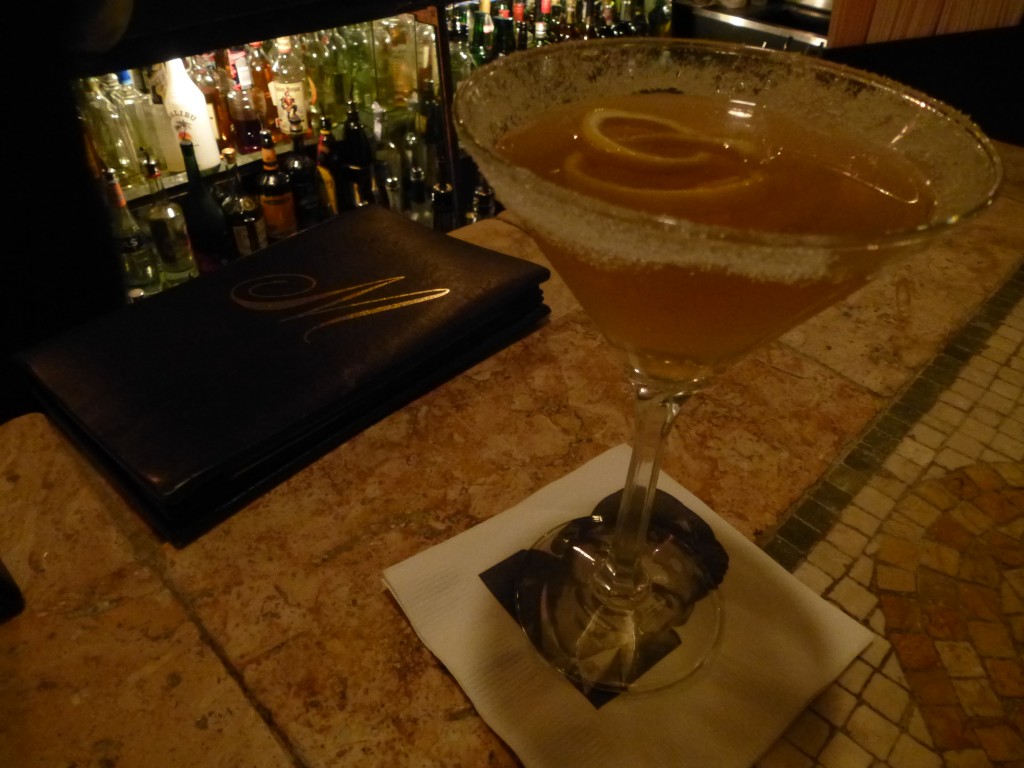
A "Sidecar" at Melvyn'sLet’s take a breather from Temecula for a moment and talk about Melvyn’s, a “legendary” Palm Springs bar and restaurant which used to be popular with celebrity types, most notably Frank Sinatra. According to its website, a poll by a local newspaper ranked Melvyn’s as having the “#1 Best Martini” in the city. In the mood for a good cocktail and a little old-school Palm Springs glamor, I stopped in for a drink.

The atmosphere was pleasant enough, with live piano music and a well-dressed crowd munching on steaks. I pulled up a bar stool and ordered one of my favorite classic cocktails: A Sidecar. The bartender got to work.

A waitress nearby overheard my order and asked the bartender what goes into the drink. He replied, “It’s brandy, triple sec and sour mix, and you pour that into a glass with a sugared rim. It’s basically like a margarita but with brandy instead of tequila.”

The waitress inquired, with appropriate skepticism, “Is that good?” Then she looked at me, and noticing the look of confused horror on my face, she added, “Because I don’t think he likes the sound of that.”

Indeed I did not. “Yes, I was a little surprised to hear your recipe,” I admitted. “I usually use Cognac, triple sec and fresh lemon juice.” (As described toward the end of this post).

“Well, this is how we make it here,” the bartender replied. “Why don’t you give it a try and see if you like it.”

Though I usually draw the line at artificially flavored sour mix, I’m not one to shy away from an unusual interpretation of a drink. I agreed to give this Brandy Margarita/Sidecar concoction a try.

I gingerly took a sip, and it didn’t taste awful. It was rather light, not especially strong and not especially flavorful. I suppose if one had never tasted a real Sidecar, one might think this drink was innocuous enough, if a little boring, and one would probably never order it again.

If one has tasted a real Sidecar, and one most certainly has, this sad cocktail would seem a poor imitation at best. A Sidecar should be bright and citrusy with a round, darkly sweet underbelly. With dead flavors and a watery texture, this drink failed to achieve any of the sprightliness or complexity of the properly made cocktail. Even more upsetting, it contained sour mix, a noxiously green chemical stew with barely a natural ingredient to its name. Not only does the drink taste bad, it’s bad for you.

So congratulations, Melvyn’s. The year is still young, but so far, your Brandy Margarita — er, Sidecar — wins my award for Worst Cocktail of 2013.

To experience the joys of a real Sidecar yourself, add two parts Cognac, one part Triple Sec (or Cointreau if you’re feeling extravagant) and one part fresh-squeezed lemon juice to a shaker with ice. To get the proportions right, squeeze your lemon juice first and use that as the measure of a part. Then shake and strain into a martini glass. Easy! It’s traditional to sugar the rim of the glass, but I’m lazy and I skip that step.

And heck, since blood oranges are appearing in grocery stores now, you might give this Bloody Sidecar recipe a try as well!

Melvyn's Restaurant & Lounge on Urbanspoon

Top Temecula Wineries, Part 1: Wiens

6 February 2013

Should you decide to visit the picturesque wine country of Temecula, California, there are three wineries you simply shouldn’t miss, on any account. All three serve excellent wines which showcase some of Temecula’s true potential.

WIENS FAMILY CELLARS

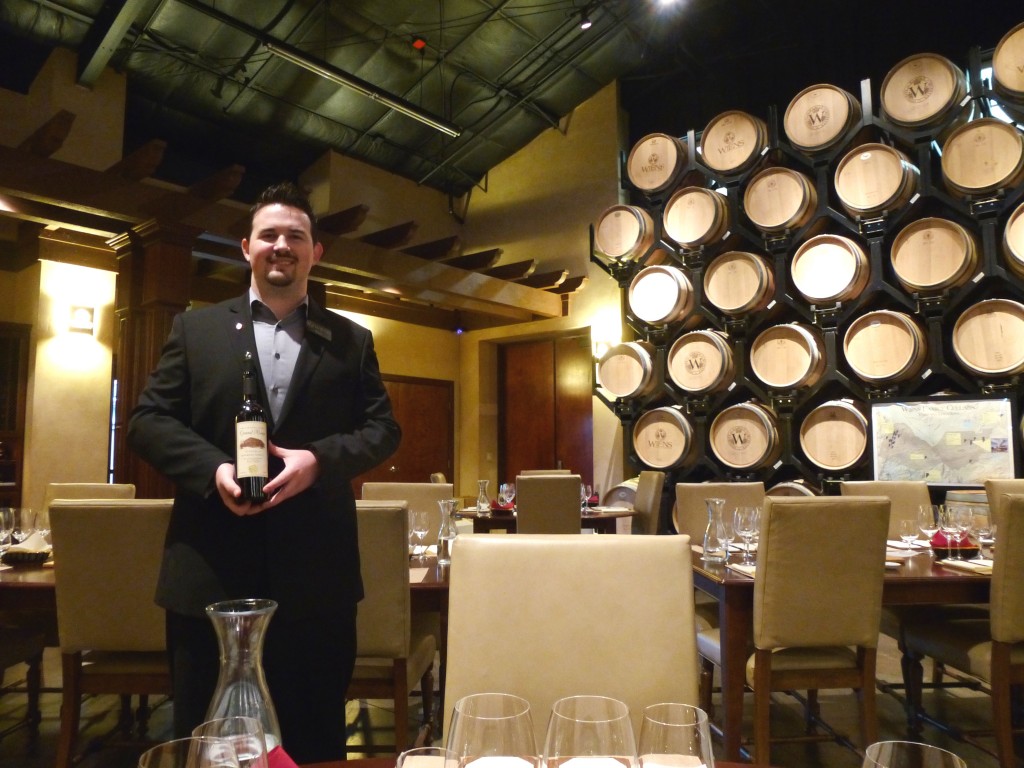
Blair in the Cellar Room at WiensThis winery has a large tasting room on the main road through the region, and this tasting room no doubt draws the buzz-seeking groups so prevalent at Ponte.

In a very smart move, this winery allows people really interested in the wine to make reservations for a $30 reserve tasting, held at formally set tables in a separate room on the property. I reserved a space for the 10:30 a.m. tasting on a Sunday, and it turned out to be a private reserve tasting — not a single other person had signed up! It was a grand experience, and the wines were, without exception, positively delightful.

2010 Reserve Chardonnay: A pretty gold color, this wine smelled of ripe pears. It had a lush texture and a woodsy start, but limey acids and even some minerals ensured that this was no butter bomb.

2008 Reserve Cabernet Franc: The fruit for this wine came from Paso Robles, but Wiens just sold this vineyard, and so the 2008 will be the last vintage of its Paso Robles Cabernet Franc. It had a sexy aroma of rich plums, a little black pepper and some chocolate. Woo! True to the variety, the wine moved from plummy fruit to something herbaceous to a tannic finish. A pairing of Havarti tamed the tannins, and some olives cured with rosemary and red wine made for a wonderfully bright and briny match.

2009 Chateau Grand Rouge: An unusual Cabernet Franc-heavy blend of 45% Cabernet Franc, 34% Cabernet Sauvignon and 11% Malbec. With a lovely dark red hue, this Bordeaux-style blend had an alluring aroma of chocolatey raspberries. Beautifully balanced, with plummy fruit, soft balancing acids, some rather hefty tannins and a bit of wood. It has some finesse but also a spicy zing — it’s an elegant young thing with a bit of a wild streak.

2008 Reserve Cabernet Sauvignon: This blend of 90% Cabernet and 10% Merlot had a darkly fruity nose mixed with something herbal. It exhibited restrained power, with hearty, meaty fruit and a tannic finish. It would surely be magnificent with a good steak, but it also worked marvelously with some goat milk gouda, becoming bigger and spicier.

2007 Reserve Syrah: The aroma of dark plums, chocolate and tobacco had me at first sniff. I also loved the supple mouthfeel and dusky fruit, followed by some acids, white-pepper spice and a touch of tobacco at the end. It tasted even zestier when paired with some smoked gouda.

2009 Reserve Petit Sirah: It’s rather unusual to see this variety as a varietal, but it really worked. Clocking in at a substantial 15.3% alcohol level, this wine had a deep aroma of raspberry jam. Another sexy wine with ample, rich fruit, a spicy finish, and some not insignificant finesse. Some salami-wrapped mozzarella brought out some additional meaty notes in the wine.

None of these wines is inexpensive, but hey, if you’ve got the money, you’ll surely be pleased with any of the above.

Ah crap. I got so excited about these wines, I didn’t leave much room for Doffo and Palumbo. Well, those wineries deserve their own blog posts in any case. The Temecula journey continues!

« Previous PageNext Page »