Postcards From Germany #3

19 May 2013
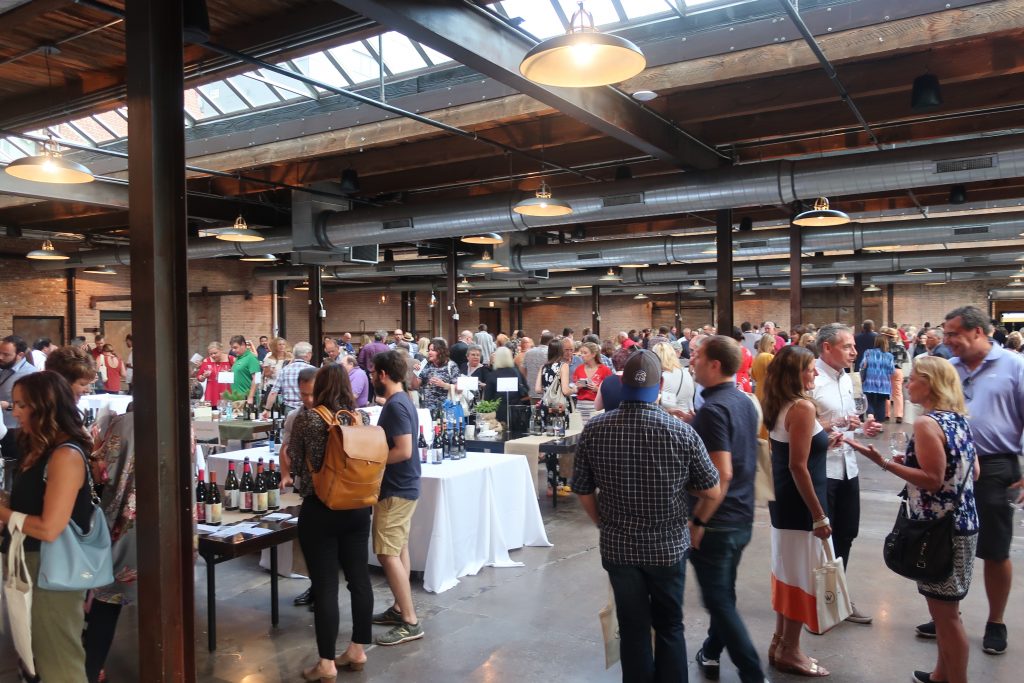
Wine tasting in the Pfalz

Wine tasting in the Pfalz


Wine tasting in the Rheingau

Wine tasting in the Rheingau


Wine tasting in the Mosel Valley

Wine tasting in the Mosel Valley

Share

Postcard From Germany #2

15 May 2013

Sauvignon Blanc from Freiburg

One of the best times of my life was the year I spent studying in Freiburg, Germany’s “sunniest” city, according to the slogan. I drank a lot of wine there, and I must say little of it was any good. But then what can you expect for $4 a bottle?

It was thus with intrigue and delight that I received the news from the sommelier at Residenz Heinz Winkler that they had a 2011 Weingut Landmann Sauvignon Blanc from Freiburg by the glass. A German Sauvignon Blanc? From my own little Freiburg?

I’ve been seeing a surprising number of Sauvignon Blanc-based wines here in Germany on this trip. They’re becoming quite the fashion, according to one winemaker I spoke with, especially after the hot vintage of 2003. It also helps that German wine law now allows Sauvignon Blanc to receive a Qualitätswein classification.

Sunny Freiburg certainly came through with this Sauvignon Blanc. It had a soft, green aroma with some stone, soft fruit, and subtle but pointy acids. It wasn’t especially big, but it was focused and it held my interest from start to finish.

So many interesting things I’ve tasted so far, and I haven’t even made it to a wine region yet!

Share

Postcard From Germany #1

11 May 2013

I’m winding my way through Bavaria at the moment, and what a lovely place! Mountains, forests, charming little towns… It’s idyllic.

And of course, I’ve already found all sorts of exciting things to drink. I’ll post postcards of my favorites whenever I get the chance. Here is Postcard #1:

Grauburgunder Auslese

Munich isn’t all about beer. At the Pfalzer Residenz Weinstube, a wine bar dedicated to the renowned Pfalz region, I sampled this memorable 2008 Erpolzheimer Kieselberg Grauburgunder (Pinot Grigio/Pinot Gris) Auslese, made by the Winzergenossenschaft Kallstadt. What a mouthful, both in terms of pronunciation and flavor.

This remarkable wine from Kallstadt (just north of Bad Dürkheim) had a rich gold color and an aroma of green apples and spicy pineapple. It tasted even better than it smelled, with rich, sweet fruit and a lush, caramelly texture, balanced by incredibly lively, gingery spice. Zow.

I asked the waiter if he’d sampled the wine. He replied, with some apprehension, that he had. “Ah good — it’s really delicious,” I exclaimed.

“Do you think so? It’s not really to my taste…”

Leave it to a German waiter to rain on my parade. Yes, I do think so. The wine is wonderful. Punkt.

Share

Don’t Like It? Make It Yourself.

8 May 2013
Me and Alessandro

Me and Alessandro Bindocci

If you discover that wine from a certain nearby region is generally not to your liking, you can take a number of courses of action. A normal oenophile would probably just drink wine from another region. A more obsessive/compulsive oenophile might doggedly keep trying wines from that region until she found one that agreed with her palate. But these solutions, in the end, are for amateurs.

If you’re a professional, like Alessandro Bindocci, you go to that region, rent a vineyard, and make the wine yourself.

Traditionally, wine made from Barbera, a respected variety from Italy’s Piemonte (Piedmont) region, did not see a lot of time in oak. In fact, according to The Oxford Companion to Wine, it wasn’t until the 1980s and 90s that “a small number of Barberas underwent a significant metamorphosis” as producers undertook barrel maturation. And originally, the Companion continues, the notion of aging Barbera in barriques (small casks holding approx. 59 gallons) was greeted with “local bewilderment.” But nowadays, many of the Barberas you’ll find are aged in barriques of new French oak.

According to The World Atlas of Wine, these barrique-aged Barberas “conform more closely to the modern red wine stereotype: big, bold, deep purple, and easy to appreciate in youth.” But if you like your red wine with food, acids are the most important thing. Bindocci finds many of these new Barberas over-oaked, with not enough acid to balance things out (a complaint commonly expressed about many California wines).

As a fourth-generation winemaker, Bindocci was uniquely positioned to change things. Under the Mazzoni label, he rents Piemonte vineyards and vinifies the wine himself in stainless steel. The wine is then transported to Montalcino’s Il Poggione winery, which his family has managed since the 19th century. There, it is bottled and bottle-aged in Il Poggione’s cellars.

It seems like a lot of trouble. I suspect I would have been satisfied to give up Barbera altogether and simply drink the local Brunello di Montalcino! But then Bindocci shared a glass of his 2009 Mazzoni Barbera with me, and I could understand his passion for it. It had a tightly wound, earthy aroma. I took a sip and was greeted by a burst of fruit, some controlled black-pepper spice and an almost raisiny finish. It had a velvety texture, and though it tasted rich, it was quite light on its feet (thanks to those important balancing acids). The Mazzoni tasted even bigger and fruitier paired with some roasted red peppers, capers and burrata. And sampled with some prosciutto, notes of iron came to the fore.

I wonder if Bindocci’s decision to age the wine in stainless steel instead of the now-ubiquitous oak once again caused “local bewilderment?” Cheers to him for having the courage to buck tradition.

Share

A Super White Super Tuscan

4 May 2013

Mazzoni Pinot GrigioWhen I think of a “Super Tuscan,” I think of Cabernet or Merlot (or, to be honest, a Superman-like winemaker clad in an Armani cape). But certainly not a white wine. The Super Tuscan phenomenon started with Sassicaia, a wine wholly outside the DOC classification system. It was made with Cabernet, not the typical Sangiovese, and the vines were planted near the coast, miles away from any DOC-recognized vineyards. Thus, Sassicaia had to be labeled as a lowly Vino da Tavola, along with the most basic Italian plonk, despite the fact that it was one of Tuscany’s best wines.

The classification system has since been rethought, and wineries working with “international” varieties such as Cabernet, Merlot and Syrah can now label their wines IGT (Indicazioni Geografiche Tipiche), which can at least indicate a region of origin, instead of simply “Italy.” Reds dominate this category of wine, but that may be changing, as I discovered over dinner earlier this week.

The engaging Alessandro Bindocci of Tenuta Il Poggione, along with the vivacious Liz Barrett of Terlato Wines, a major Chicago importer, invited me to dinner to try some of Il Poggione’s renowned Brunello di Montalcino. I was surprised and delighted when we started the evening not with a Brunello, but a Pinot Grigio.

I had never sampled, to my knowledge, a Tuscan Pinot Grigio — all the quality Italian Pinot Grigios I knew of came from the mountainous north, from Alto Adige or Friuli. According to The Oxford Companion to Wine, “Pinot Grigio is planted as far south as Emilia-Romagna,” the province on Tuscany’s northern border. A Tuscan Pinot Grigio varietal — a white Super Tuscan — is extremely unusual, and it had my Odd Bacchus antennae tingling.

The hand-harvested fruit for the 2011 Mazzoni Pinot Grigio comes from vineyards in Tuscany’s Maremma region, a formerly marshy and malarial strip along Italy’s west coast (described in more detail in this post). I wouldn’t have guessed this environment would be well-suited to Pinot Grigio, which I associate with cooler, high-altitude terroir, but that’s why I make a better blogger than winemaker. This Pinot Grigio tasted delicious.

Many of us associate Pinot Grigio with light, inoffensive and bland flavors; it’s a wine for a hot summer pool party or a beach picnic. But this golden-hued beauty had some oomph. After pressing, the juice sits for 24 hours on the skins, giving the wine additional body, followed by 25 days of cold fermentation, increasing the wine’s acidity. The craftsmanship is readily apparent in both the aroma and flavor.

The wine smelled fresh and lively, like a green whiff of spring. On the palate, it exhibited focused and controlled fruit, prickly acids, some aromatic qualities, and a surprisingly lush finish. It was light but complex, and a fine value for the price. Sampled with a white pizza topped with arugula and parmesan, the food-friendly acids kicked into high gear, and the wine became juicier and rounder. A delight.

White Super Tuscan wines may not have captured the public’s imagination just yet, but after tasting this Pinot Grigio, I have a feeling we’ll be seeing a lot more of them in the near future.

SUMMARY

2011 Mazzoni Pinot Grigio: Light, lively and complex, with food-friendly acids and unusually lush fruit. A very good value for the price, especially compared to the most famous mass-market Pinot Grigios.

Grade: A-

Find It: A number of Whole Foods stores carry the wine, or you can buy it online for $17 from Uncorked.com.

Note: The wines described in this post were provided free of charge, as was the dinner that accompanied them.

Share

The Memorable Whites Of Viña Chocalán

2 May 2013

Vina ChocolanOne of the eco-lodges where I stayed in Costa Rica veered much more towards “resort” than “lodge,” with a swim-up bar, wine bar and even a small sushi restaurant. I felt, I must admit, a little silly supping on sushi in the middle of Central America, but then I suppose it’s no more ridiculous in Costa Rica than it is in Chicago.

In any event, this sushi restaurant had two cases dispensing some surprisingly unusual wines by the glass, and I sampled several small pours along with my fish. The wines of Viña Chocalán turned out to be something of a revelation.

This winery dedicated to “sustainable and socially responsible” production methods is located in Chile’s famous Maipo Valley, near the town of Melipilla just south of the capital, Santiago. Phylloxera-free Maipo is well-known for its Cabernet, Chardonnay and, to a lesser extent, its Carménère. But the sushi restaurant’s wine case boasted some true Maipo oddballs: Viña Chocalán Gewürztraminer, Viognier and Riesling in the sushi restaurant’s wine case.

I was initially confused to see these three varieties coming from one winery — Viognier traditionally thrives in France’s warm Rhône Valley, far from much chillier Alsace and Germany, where Gewürztraminer and Riesling are happiest. But a closer inspection of the labels revealed that Viña Chocalán’s Riesling and Gewürztraminer come from San Antonio, not Maipo. San Antonio, which Sotheby’s Wine Encyclopedia calls “the fastest-rising new wine district in [the coastal viticultural] region,” is closer to the Pacific Ocean than Maipo, making it more susceptible to the cooling influence of the Humboldt Current.

None of these grape varieties is grown in any significant amount in Maipo or San Antonio. None of my reference books mentions any of them, and even the Viña Chocalán website omits Riesling and Gewürztraminer from its roster of wines. These are pioneer varietals, and if these examples are any indication, I’d say they have a serious future:

Viña Chocalán Gewürztraminer (San Antonio): I loved the sweet, floral aroma, which reminded me of jasmine and honey. On the palate, this wine started with some slightly watery fruit, but it tightened up into some white pepper spice and a finish of tart acids.

Viña Chocalán Viognier Reserve (Maipo): A fine example of Viognier — dry, tight, focused, minerally and floral at the end.

Viña Chocalán Riesling (San Antonio): This was the one that really blew me away. Its dry, tart and woodsy flavors totally took me by surprise. This isn’t a Riesling that will please everyone, but I found it racy, exciting and wonderfully unusual.

You may not see any of these specific wines in your local shop, but keep your eye out for Chilean varietals besides the usual Sauvignon Blanc, Cabernet, Chardonnay and Carménère. Winemakers are engaging in some fascinating experiments down there, and you might just stumble across a real gem.

Share

Patagonian Pinot

27 April 2013
Fin del Mundo Pinot Noir in the Hotel Grano de Oro

Fin del Mundo Pinot Noir in the Hotel Grano de Oro

Costa Rica isn’t exactly a major wine producer, but that doesn’t mean you can’t find fascinating things to drink there. Restaurant wine lists tend to focus heavily on South American wines, as you might expect, but it wasn’t an unending sea of Malbec (Argentina’s most famous variety). Menu after menu included at least one Argentinean Pinot Noir, a notoriously fickle grape I associate with the Côte d’Or much more than the Pampas.

And there’s a reason for that — Argentinean Pinots can be quite difficult to come by in the U.S. I searched for Argentinean Pinot Noir on the website of Binny’s, one of the country’s largest wine stores, and I came up with just one solitary option (a 2011 Bodega NQN Finca La Papay for $12). I seemed I had some odd Pinot Noir on my hands, a prospect I found rather exciting. It’s Pinot Noir, after all, that elicits such passion in the film Sideways, and it’s Pinot Noir that is responsible for the greatest reds of Burgundy and Oregon. I had never sampled one from Argentina, however, and I couldn’t wait to see how this “capricious and extremely variably vine” (The Oxford Companion to Wine) would perform in that terroir.

According to the sources I consulted, Argentinean Pinot Noir has yet to fully develop. The Oxford Companion to Wine was dismissive, asserting that Pinot “has yet to find a suitable home in Argentina.” The World Atlas of Wine takes a more optimistic tone, however, noting that in Patagonia and Mendoza’s high-altitude vineyards, “some promising examples are beginning to emerge.” Although it didn’t mention Pinot specifically, The Sotheby’s Wine Encyclopedia took a dim view of Argentina as a whole, chiding most of the country’s wineries for allowing excessively high yields and doing too little to “alter Argentina’s image as a bottomless vat.” Ouch.

I didn’t taste any particularly expensive Argentinean Pinot Noirs, but the ones I did sample ranged from simple and charming to quite exciting:

2011 Saurus Patagonia Pinot Noir: Patagonia is Argentina’s coolest wine region, making it most suitable to growing Pinot Noir. This wine comes from San Patricio del Chañar, a “new winemaking area,” according to the winery’s website, along the border with Chile. It had a very aromatic nose of red fruit, a beautifully creamy texture and prickly black-pepper spice, held in check with impressive focus and control.

2010 Bodega del Fin del Mundo Reserva Pinot Noir: Also produced in Patagonia, this winery’s Pinot Noir doesn’t seem to appear on its website, though it’s in Spanish, so what do I know? In any case, I liked its aroma of black cherries, its tightly wound red fruit, subtle white-pepper spice and earthy finish. A touch medicinal, but tasty nevertheless.

2011 Luigi Bosca Pinot Noir: This wine comes from 45-year-old vineyards in Mendoza, a warmer region to the north of Patagonia. It lacked the sharp focus of the Saurus, but I very much enjoyed its fresh, easy fruit and earthy finish. It was an ideal warm-weather wine, perfect for an al fresco dinner overlooking the rainforest.

You will likely have trouble finding one of these specific labels in your local wine shop, but should you run across an Argentinean Pinot Noir, I recommend giving it a try. It may not reach the heights of Burgundy, but it will likely be a perfectly tasty wine at a perfectly reasonable price.

Share

Guaro

24 April 2013
Guapiriña

Guapiriña

Olga, it turns out, isn’t the only one in Costa Rica making moonshine. In fact, in an effort to curb the production of homemade sugarcane liquor, also known as guaro, the Costa Rican government began manufacturing the stuff itself, according to Wikipedia. Now, bottles of Cacique guaro, produced by the Fabrica Nacional de Licores-Fanal, appear behind nearly every bar in the country.

Of course, I took the opportunity to try Cacique both in cocktails and straight up. Sipped neat, this clear spirit (30% alcohol) reminded some of my fellow tasters at the bar of a smooth vodka. I didn’t disagree, but to my Odd Bacchus mind, it resembled a good-quality soju (a Korean spirit distilled from rice or sweet potatoes). The Cacique had a bare hint of sweetness and fruit at the beginning, followed by some white pepper spice.

Because of its basic lack of flavor, Cacique (translated as “chief,” as in the head of a tribe) makes for very versatile cocktail ingredient. I sampled it in a number of different concoctions during my stay in Costa Rica, each one more delicious than the last.

At a swim-up bar — a ridiculously fun addition to any pool — I sampled a wonderfully refreshing Mojito made with Cacique, fresh limes and fresh mint. Another evening, lacking electricity in my accommodations, I decamped to the bar for a delicious “Guapiriña,” a Caipirinha which substituted Cacique for the usual cachaça (a Brazilian sugarcane-based spirit). The simplicity of fresh limes muddled with sugar and mixed with guaro was pure delight. And at the very fancy Grano de Oro Hotel in San Jose, I indulged in a Tico Sour, a light and perfectly balanced mix of Cacique shaken with lemon and egg white.

As a matter of fact, as I go through the list of cocktails I sipped while in Costa Rica, I can’t think of a single stinker. The cocktail menus may not include the most innovative concoctions, but the bartenders I met excelled at mixing the classics. Fresh ingredients were the norm, not the exception, which made coming back from a day of steamy jungle hiking all the sweeter.

Share

Costa Rican Moonshine

20 April 2013

Chirrite

While staying in Bajos del Toro, Costa Rica, I took an afternoon to go horseback riding. My guide had the wonderful idea to head into town to learn to make tortillas with Olga, and we trotted, thankfully very slowly, to her pulperia.

It turned out that tortillas weren’t the only thing Olga knew how to whip up. She produced a plastic bottle full of Pepto-Bismol-pink liquid, which my guide identified as chirrite — moonshine. And how could I turn down a mug of that?

I gingerly took a sip (improperly made, moonshine can cause blindness or even death) and my word, but it tasted delicious. Like creamy, very alcoholic rose water.

My guide seemed to think rose water had no part of it, however, and consulting with Olga, determined that wild tomatoes played some role. I suspect there must have been a mistranslation.

In any case, should you ever find yourself in Bajos del Toro, I strongly recommend seeking out the Olga’s pulperia. Try her homemade peanut nougat, her fresh tortillas, her delectable homemade sausage, and above all, her top-notch moonshine. (So far, my eyesight remains intact.)

Share

White Lion Of Sri Lanka – Part 2

17 April 2013
White Lion Mixology Session

White Lion Mixology Session

After I tasted White Lion VSOA‘s cognac-like flavor, I couldn’t wait to try working with it in some cocktails. This Sri Lankan spirit is distilled from the nectar of unopened coconut flowers, but it doesn’t taste especially like coconut. It starts sweet and smooth, gets spicy, and finishes with something savory and herbaceous (you can read more about White Lion VSOA in my previous post).

Because it reminded me of cognac, I wanted to see how it would perform in a classic Sidecar recipe.

WHITE LION SIDECAR:

–2 parts White Lion VSOA

–1 part Orange Liqueur (I used Stirrings Triple Sec, but Cointreau or Gran Marnier would also be lovely)

–1 part Freshly-Squeezed Lemon Juice (do not use bottled juice or, heaven forbid, sour mix)

Juice your lemon, and use the amount of juice you get as the measure of one part. A standard lemon will make one large Sidecar or two small ones. Combine all the ingredients in a shaker with ice, shake vigorously, and strain into a martini glass. It’s traditional to rim the glass with sugar, but I can’t be bothered with that sort of thing. The cocktail had a luscious aroma of orange and caramel, and its darkly sweet flavors were balanced perfectly by the bright citrus. It’s a smashing drink, and I made myself a second round the next day.

I’d experimented previously with ginger liqueur, and I had some success substituting it for the orange liqueur in the recipe above. This WHITE LION GINGER SIDECAR tastes wonderfully spicy and exotic, but the ginger can get a little overpowering if you use the proportions above. I recommend 2 parts White Lion, 3/4 part ginger liqueur (Koval or Stirrings), and 1 part freshly-squeezed lemon juice.

The White Lion website recommends a number of different cocktail recipes, including an “Aria,” which combines White Lion, lime juice, simple syrup and a lot of water. But why add the water? As my father is fond of saying, “Fish swim in it!” I tried the recipe without any dilution, and I don’t think it suffered:

WHITE LION DAQUIRI:

–2 parts White Lion VSOA

–1 part Freshly-Squeezed Lime Juice

–Splash of Simple Syrup

As before, juice your lime(s) first, and use the amount of liquid you get as the measure of one part. Combine the ingredients in a cocktail shaker with ice, shake vigorously, and strain into martini glasses or cocktail coupes. Garnish, if you like, with a lime wheel or wedge. This cocktail, in which White Lion takes the place of rum, tasted tropical, aromatic and citrusy — I felt like I should be drinking it in the courtyard of the Raffles Hotel in Singapore. Exotic and delicious.

Another recipe the White Lion website recommends is a classic arrack/ginger beer cocktail they call a GBA. I tried that combination, which is essentially a Dark ‘n’ Stormy substituting White Lion for rum, and I didn’t find it satisfying. It felt a little tight to me, and not rounded. Since I’d already juiced some limes, I decided to take it in more of a Moscow Mule direction. That worked wonders:

WHITE LION MOSCOW MULE:

–2 parts Ginger Beer (Use the very best you can find. My go-to ginger beer is Reed’s.)

–1 part White Lion VSOA

–1/2 part Freshly-Squeezed Lime Juice

To maximize fizz, pour your chilled ginger beer in an empty tumbler. Carefully add a couple of large ice cubes, and then top off with the lime juice and White Lion. Give the drink a gentle stir to incorporate the ingredients. With the addition of the lime juice, the cocktail took on a new dimension, becoming a little sweeter, a little spicier, and definitely more well-balanced. A traditional Moscow Mule also includes mint, but I didn’t have any on hand, and so neither does this recipe.

I also attempted a classic Manhattan recipe using the White Lion, and again, it required a little tweaking for my palate. My first try, which combined White Lion, sweet vermouth and Angostura Bitters, tasted a little dry to me, but those who enjoy Perfect Manhattans will love this cocktail. I changed out the sweet vermouth for some Byrrh, and that made a cocktail I could really get behind:

WLB MANHATTAN

–2 parts White Lion VSOA

–1 part Byrrh

–Few dashes of Angostura Bitters

Combine all the ingredients in a cocktail shaker with ice. Shake vigorously, or if you’re not rushed, try stirring everything for a minute or two to achieve an extra-smooth texture. The resulting red-orange cocktail tastes intriguingly sweet, bitter and savory, with some menthol and spice on the finish.

Finally, since White Lion is distilled from coconut flower nectar, I wanted to try mixing it with coconut water. That combination unfortunately tastes terrible. A little lemon juice helps immensely, however, especially if you like your cocktails on the savory side. Since this is the last cocktail in my White Lion round-up, I’ll call it the

LION’S TAIL

–2 parts White Lion VSOA

–1 part Coconut Water

–1 part Freshly-Squeezed Lemon Juice

–Splash of Simple Syrup

As before, use the amount of juice you get from your lemon as the measure of a part. Combine the ingredients in a shaker with ice, and shake vigorously. Strain into a martini glass, or — why not — into a coconut shell. This mix has a uniquely savory flavor which is not at all unpleasant. You can omit the simple syrup, but I found that it brightened the citrus notes considerably.

These recipes but scratch the surface of the potential of White Lion in cocktails. It’s currently available online and in California, but expect distribution to the Midwest and East Coast in the near future. It can’t come to Chicago soon enough for me — I’ve already knocked off most of my bottle!

Share
Next Page »