Unusual Pairings At Urban Union – Part 2

5 January 2013
Comments Off on Unusual Pairings At Urban Union – Part 2

We drank so many tasty and unusual things at our dinner at Urban Union, I couldn’t possibly fit them all into one post. To read about some fine unfiltered/unpasteurized sake, a bright wine from France’s Savoie and a truly odd selection from Macedonia, follow this link.

To venture yet further into the obscure, read on!
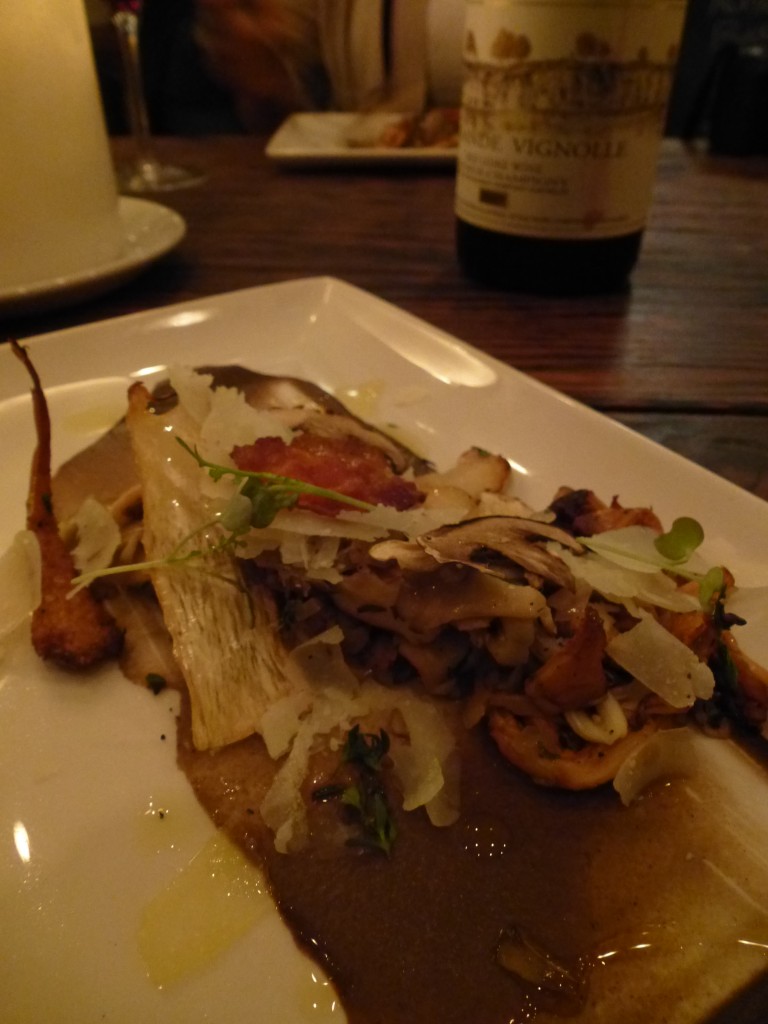
Mushrooms and Domaine FilliatreauWhen most people think of wines from France’s Loire Valley — if they think of them at all — they think of crisp, minerally whites like Sancerre. But the Loire produces robust reds as well, most notably from the Cabernet Franc variety. Ex-Sommelier Andrew Algren (he left Urban Union just days after our dinner) selected a wine from the Saumur-Champigny section of the Loire, which produces “one of Cabernet Franc’s most refreshing expressions,” according to The World Atlas to Wine. According to Algren, it’s “like grabbing a handful of French forest floor and chowing down.” I was intrigued.

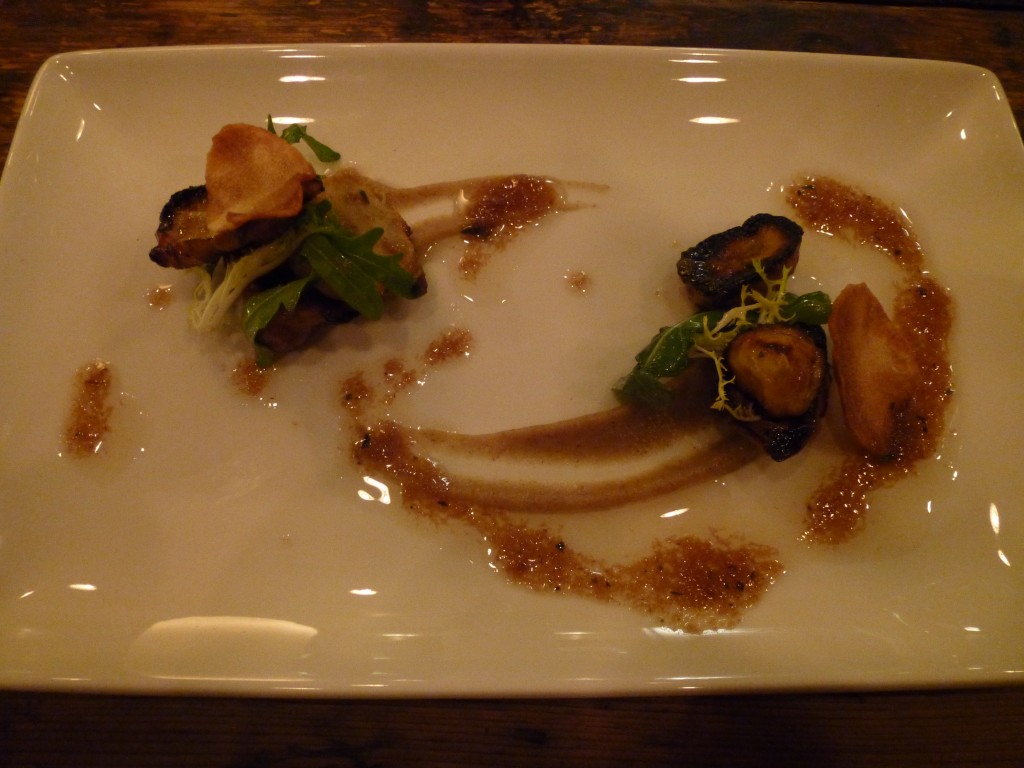
To me, the 2010 Domaine Filliatreau “La Grande Vignolle” tasted eye-poppingly tight, especially after smelling its deep, enticing, meaty aroma. It was very acidic and tannic, with a finish of black pepper. It screamed for food. In keeping with the French forest floor theme, Chef de Cuisine Joshua Marrell presented a course of trumpet, chanterelle and maitake mushrooms foraged, reportedly, by a local comedian. This rather daringly simple dish smelled appealingly like mushroom-topped pizza. Its earthy flavors tamed the punchy acids in the wine, resulting in positively delightful combination.
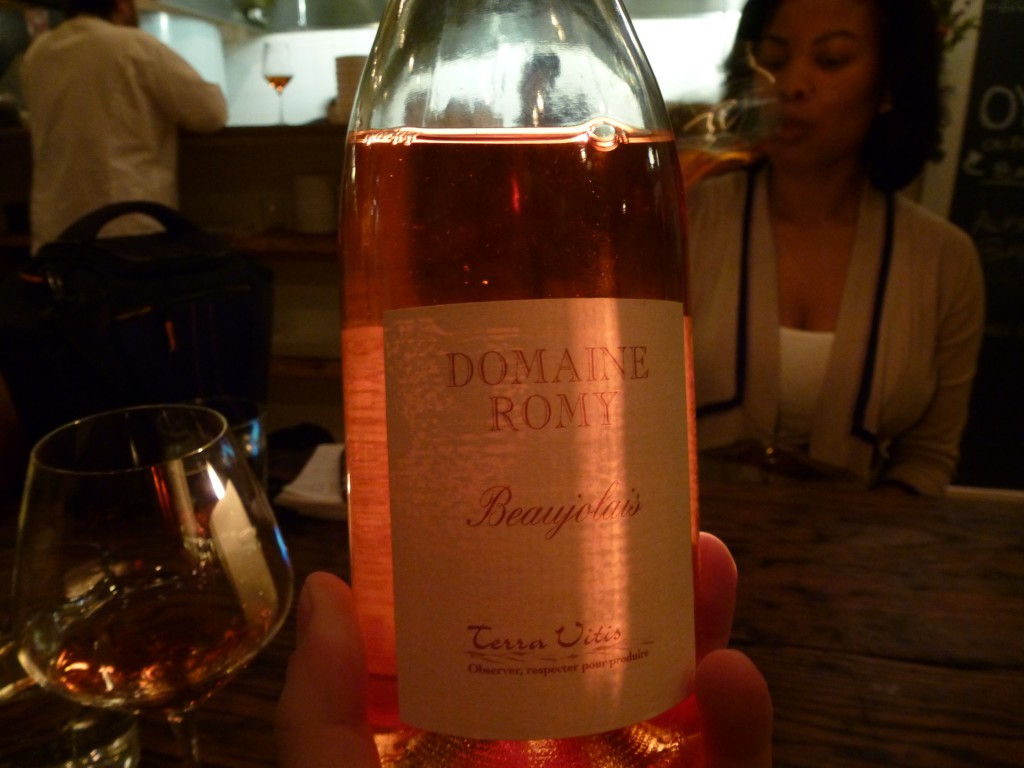
Domaine RomyBucking convention, Algren moved from a red to pink, pouring a highly unusual Beaujolais rosé (not to be confused with Beaujolais Nouveau, that fruity but usually over-sweet red released around Thanksgiving). Made from Gamay, the variety used in all red Beaujolais wines, the orangey-pink 2010 Domaine Romy Beaujolais Rosé tasted of juicy strawberries, with a firm structure and ample minerals and acids. Delicious. Served with a wonderfully garlicky dish of tender charred octopus, confit of potatoes in beef fat and scallion purée, the wine’s flavor didn’t seem to change all that much. Instead, the wine enhanced the flavor of the food, bringing its savory richness to new heights.
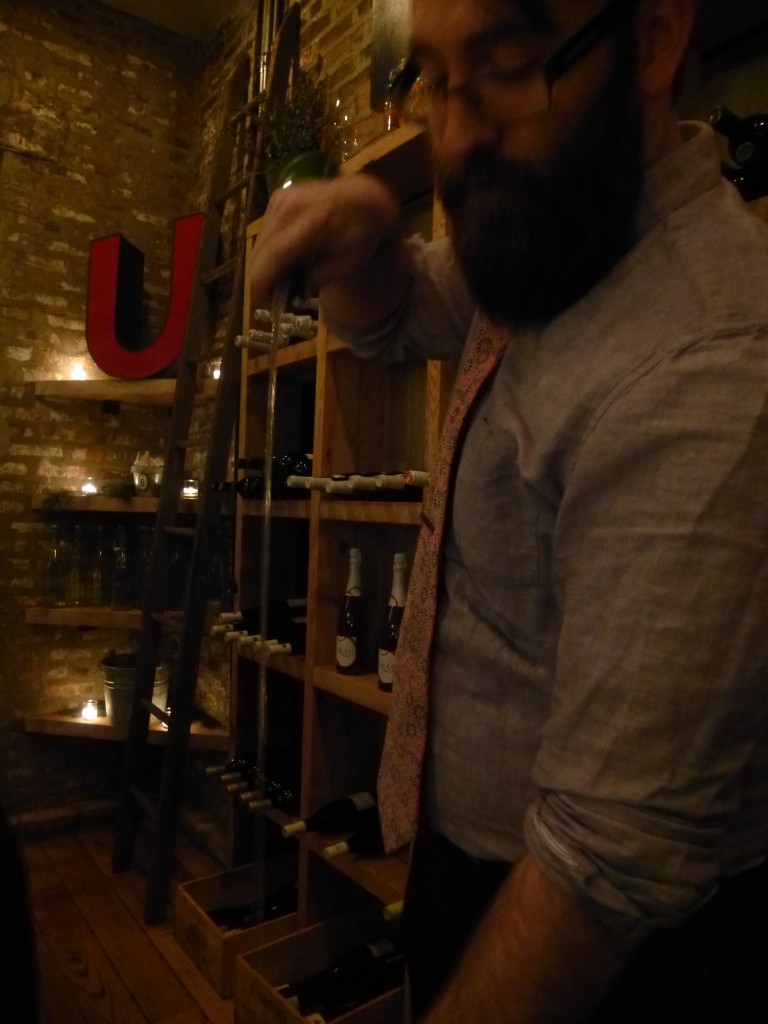
Algren pouring UlaciaAnd then we were back, oddly enough, to a white. Poured theatrically from overhead, as is traditional in Spain’s Basque country, Algren presented a 2011 Ulacia Getariako Txakolina. This tart, apply, slightly fizzy wine comes from near the town of Getaria, a region of cool, rainy summers which The Oxford Companion to Wine calls “hardly ideal grape-growing country.” Nevertheless, the whites, mostly made from the Hondarribi Zuri variety, have “noticeably improved” in the last couple of decades. (Incidentally, there’s a nasty rumor going around that Hondarribi Zuri is a hybrid of a Vitis vinifera variety and some other species of Vitis. Scandal!)

Algren paired the Ulacia with a dish of prosciutto from black-skinned pigs, pickled mustard seeds and crunchy celery root, to marvelous effect. The tart wine cut right through the fat of the prosciutto and became a bit sweeter in the process. A hearty, zesty combination I wouldn’t hesitate to order again. (Marrell graciously credited the inspiration for this dish to Marco Pierre White’s cookbook “White Heat.”)

Good heavens, there’s yet more to come? Loosen your belts, ladies and gentlemen; we’ve got three courses left to go.

Up Next: A stellar cru Beaujolais, a Lagrein from Italy, and for dessert… vermouth. Hey, this is Odd Bacchus, folks. Were you expecting Port?
Unusual Pairings At Urban Union – Part 1

2 January 2013

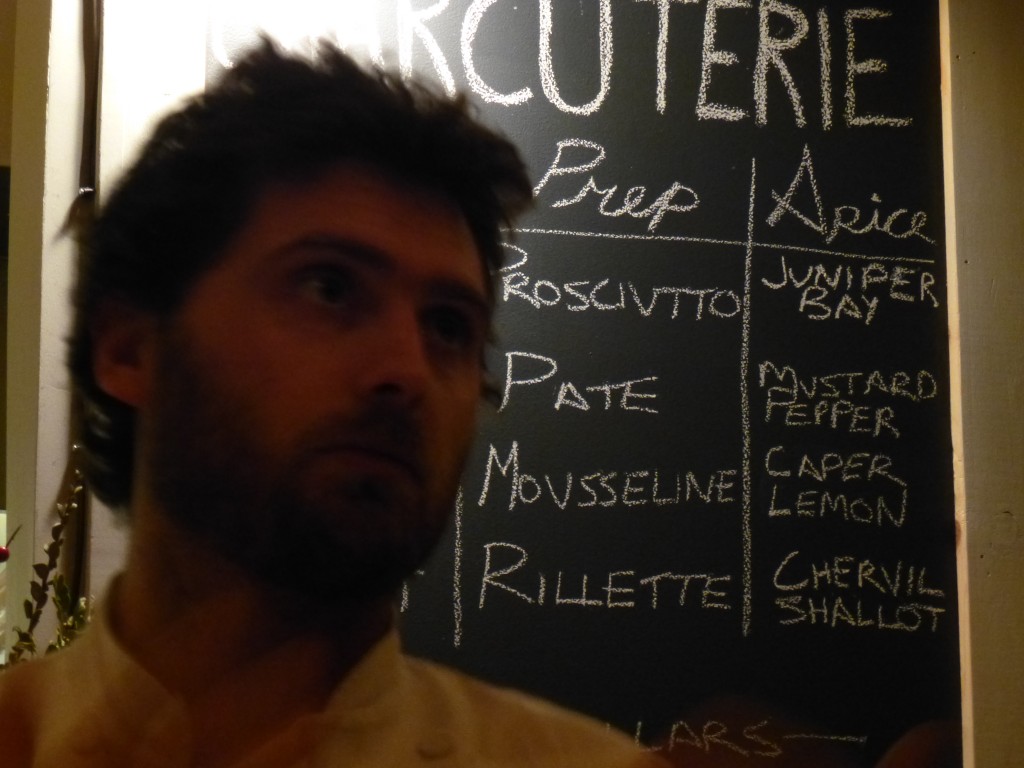
Chef de Cuisine Joshua MarrellEvery now and then, an invitation to attend a special dinner will waft my way, and though I do my best to avoid overindulgence (ahem), I feel it is my bloggerly duty to accept whenever possible. And so,  immediately following my office’s Christmas party, at which much pasta and red wine was consumed, I headed to Chicago’s Little Italy neighborhood, home to cozy and stylish Urban Union.

A handful of other food/wine bloggers gathered at the communal Chef’s Table, “where diners are served customized and unique creations, along with expertly selected wine pairings by the two sommeliers on staff,” according to the invitation. I felt a bit apprehensive, hoping that the pairings would be unusual enough to suit this blog, but as soon as I walked in, I knew it would work out just fine. A large chalkboard listed the “Wines on Tap,” starting with a Greek Moschofilero and a Californian Arneis. Yeah!

We started with a relatively conventional but undeniably delicious pairing of sake and ahi tuna sashimi with ponzu, basil and almonds. The Narutotai Ginjo Namagenshu, an unpasturized, unfiltered sake that continues to condition in its can, tasted fruity and a bit yeasty before driving to a clean, spicy finish. Paired with the sashimi, it seemed surprisingly less spicy; it became smoother, duskier. (You can read more about sake here.)

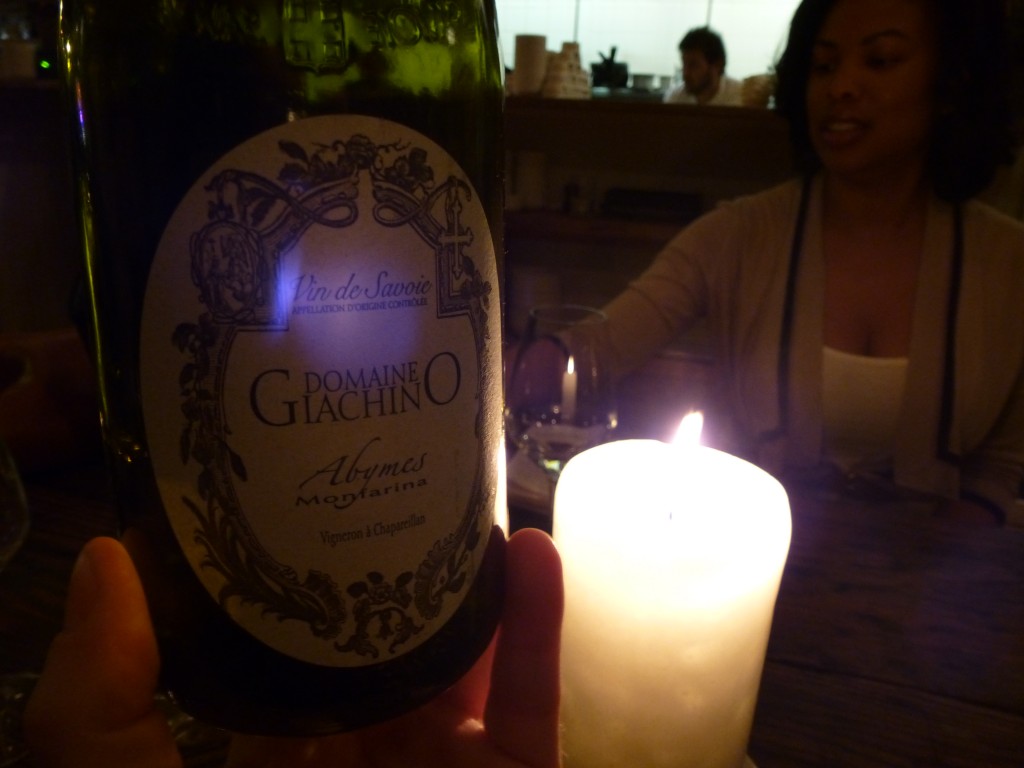
Domaine GiachinoThings started to get more unusual and exciting when General Manager and Sommelier Andrew Algren brought out the next bottle, a 2009 Domaine Giachino Abymes “Monfarina”.Very little wine escapes from France’s Alpine Savoie region, so I always feel delighted when I have the chance to taste one. This wine comes from the Abymes cru, about 100 kilometers south of Geneva, Switzerland, and it’s made with Jacquère, a white variety obscure to us but relatively common in Savoie. The wine smelled of rich green apples, and it tasted light-bodied and rather tart. The acids cried out for food, and a delightful winter beet salad with pancetta chips mellowed them nicely.

Chef de Cuisine Joshua Marrell kept things seasonal with his next course, a lush sunchoke purée topped with roasted sunchokes and sunchoke chips. Its deeply satisfying flavor worked marvelously with Algren’s most daring pairing yet: A 2011 Tikveš Rkaciteli from theSunchokes pureed, roasted and in chip form Republic of Macedonia (not to be confused with the Greek region of the same name). If you’ve encountered the incredibly ancient Rkaciteli variety at all, it was probably spelled “Rkatsiteli” and it probably came from Georgia (the country) or perhaps New York. It’s the most widely planted variety in the ex-Soviet republics, which isn’t necessarily a ringing endorsement, but it can make some excellent wines.

Macedonia, for its part, has a climate “extremely favorable to vine cultivation,” according to The Oxford Companion to Wine, and I was excited to see what this little country would do with one of the world’s oldest wine varieties. The Tikveš Rkaciteli fascinated me with aromas of bright pear and a bit of tar. It proved to be very acidic, oily and minerally, which sounds terrible, but I found it oddly enticing. The rich sunchoke dish balanced out the acids, making the wine rounder and fuller.

Up Next: The meal continues with an unexpected rosé and a wine that tastes like “grabbing a handful of the French forest floor and chowing down.”

Urban Union on Urbanspoon

Some Easy New Year’s Resolutions

29 December 2012

Full disclosure: I wrote this post last year, but I still love these resolution ideas.

Many of us use the beginning of the new year to take stock, examining our lives and bodies and, finding faults, we resolve to correct them. For the next month or two, we flail around the gym in sweaty desperation, lay siege to armies of dust soldiers in their well-defended closet fortresses, or simply try to “be more positive.” Worthy pursuits, all.

But surely you deserve some fun (and easy) resolutions as well. Consider adding one of the following to your list:

1. Drink more sparkling wine. Many people indulge in elegant Champagnes on New Year’s Eve, but for most, it’s the only time of year they break out the bubbly. Cava, Prosecco, Crémant and, of course, Champagne, are wonderful at any time of year, and they pair well with all sorts of foods. The pop of a cork makes any gathering feel more festive.

2. Drink some dessert wine. I’ve attended very few parties where one has been served, and I can’t think of the last time a dining companion ordered one in a restaurant. Any dessert wine worth its salt isn’t just candy in a bottle; it will exhibit a thrilling balance of sweetness, acid and perhaps even some minerals, wood or other flavors. Ask for a recommendation in your price range at your local wine shop, and I am 100% certain you’ll delight your guests. Or heck, just drink it yourself.

3. Drink some rosé. Sweet, boring White Zinfandel ruined the reputation of rosé in this country. Nowadays, any American winemaker who produces a proper dry rosé probably really puts his or her heart into it, because it’s unlikely to be a big money-maker. But dry rosés from anywhere can be a delight, particularly in warmer weather. I can think of few finer ways to lunch than sitting outside in the sun, dining on simple picnic fare with friends, a glass of rosé in hand.

4. Get out of your cocktail rut. Type “Classic Cocktails” into a search engine, and you’ll find all sorts of fun, time-tested ideas (or, of course, you can click on the “Cocktails” category to the right). If you’re feeling more adventurous, make your own cocktail recipe. A good rule of thumb is to use a base liquor (like vodka, gin, brandy, etc.), a smaller amount of a liqueur (like triple sec, crème de cassis, ginger liqueur) and a mixer (fresh lime juice, pineapple juice, cranberry juice). If it feels like it’s missing something, add a dash of bitters.

5. Go into your favorite wine shop and ask for something weird. Sometimes for my birthday, I request that party guests do this for my gift. I’ve received everything from root beer schnapps to a wine from Santorini that tasted like stone and sunshine. If the wine store employee looks at you like you’re crazy, resolve to find another wine store.

Happy New Year!

Top 10 Wines Of 2012

22 December 2012
Comments Off on Top 10 Wines Of 2012

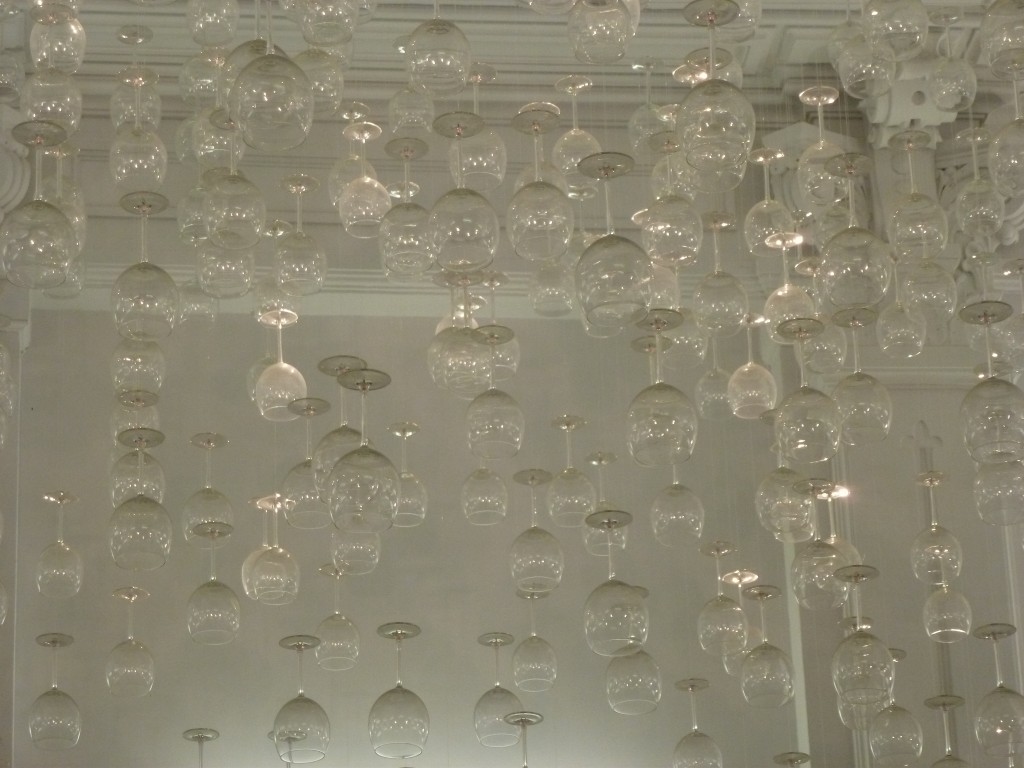
It's raining wine (glasses)!As when I wrote the previous Top 10 post about spirits and cocktails, compiling this list filled me with a sense of gratitude. What fortune, to have tasted so many fascinating and unusual wines this past year!

The title of this post is a bit misleading, however. I certainly won’t pretend to claim to know what the “best” wines of the year were. Instead, this rather idiosyncratic list highlights the wines I thought were the most exciting, whether it was because of superlative quality, unusual grape variety or off-the-beaten-track vineyard sites.

If this list demonstrates one thing, it’s that there’s a whole world of delicious unusual wine out there, and it’s bigger than even I imagined. There’s never been a better time to take a risk on something off the wall.

Links lead to the original posts about the wines:

10. MEXICAN WINE — Perhaps the most surprising discovery of the year, the Mexican wines I tasted proved to be refined and satisfying. There wasn’t a stinker in the bunch! One representative wine is the 2011 Monte Xanic Chenin Colombard, a blend of 98% Chenin Blanc and 2% Colombard. This wine from Baja started with lush, white, almost tropical fruit. It had a spicy midsection with some grapefruity acids and a slightly chalky finish. Quite delicious, and excellent with some duck carnitas tacos.

9. 2010 PAGE SPRINGS CELLARS “LA SERRANA” — Wine from Arizona surprised me as much as that from Mexico. But the Mediterranean terroir there seems to work quite well for certain varieties, especially those usually associated with the Rhône. This blend of 50% Viognier and 50% Rousanne had a nutty, almost buttery aroma, and it certainly tasted rich and creamy. But it was fruity as well, and ample acids kept the wine light on its feet.

8. AUSTRIAN ST. LAURENT — It can be hard to find, but this sexy, earthy red will reward the hunt. The single-vineyard 2007 Johanneshof Reinisch “Holzspur” Grand Reserve St. Laurent is a fine example. A brick red, the Holzspur sucked me in with a dusky nose of very dark fruit. It had a medium body, powerful spice, big fruit and a long finish. It’s Eartha Kitt in a bottle.

7. PESSAC-LÉOGNAN — A mere 650 acres are devoted to white grapes in this highly regarded but little-known corner of Bordeaux, producing some positively sumptuous wines. My favorite was the 2005 Château Malartic-Lagravière “Le Sillage de Malartic”, a 100% Sauvignon Blanc. On the nose were voluptuously ripe peaches, and tropical fruit worked its way into the palate. Some minerals kept things grounded, as did a rather woody finish. A joy to drink.

6. NV MICHEL TURGY RÉSERVE-SÉLECTION BLANC-DE-BLANC BRUT CHAMPAGNE — Champagne can hardly be classified as an obscure beverage, but it is all too unusual in my household. I had been saving this bottle of grower Champagne (made by the same person/company which owns the vineyards, in contrast to the vast majority of Champagnes on the market) for a special occasion, and it rose to the moment. The elegantly tiny bubbles felt delicate on the tongue, and the lively acids hinted at by the appley nose balanced the rich flavors of caramel corn and a bit of toast. And the finish! Nearly endless.

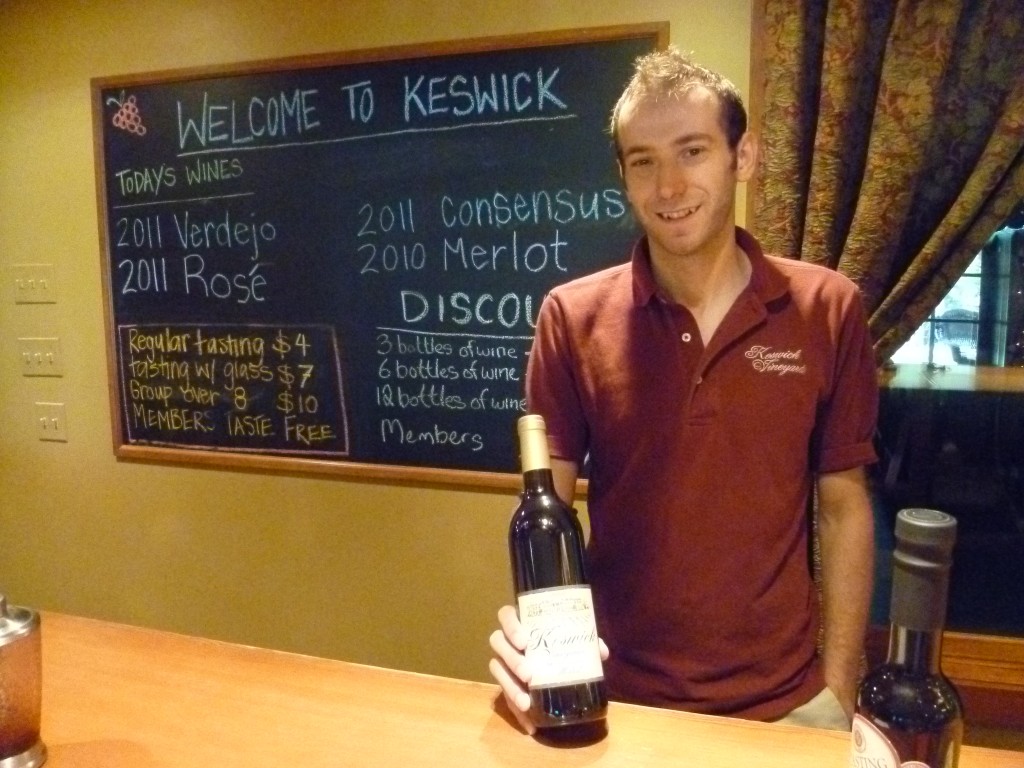
Brian at Keswick Vineyards5. 2010 KESWICK VINEYARDS MERLOT — Virginia boasts an array of fine wineries these days, and Keswick Vineyards is one of the very best. Most of Keswick’s production gets sucked up by its wine club, meaning that you either have to join the club or visit the winery. It’s worth the effort. The Merlot had a beautiful nose that reminded me of when I used to spread raspberry jam and Nutella on toasted rolls. On the palate, it was voluptuous but well-structured — like a 40-something Sophia Loren.

4. 2004 CHÂTEAU FLUTEAU CUVÉE PRESTIGE BLANC DE BLANCS — The only thing more unusual than a grower Champagne is a vintage grower Champagne. This example, made in part by a Chicago native, had nose-catching aromas of lime, peach and yeast . On the palate, it moved from popcorn to tart apple to a whisper of limestone on the finish. The ample bubbles felt very fine, delicate and elegant, and there was some real depth there as well. As it breathed, the Fluteau mellowed, becoming even richer.

3. RARE WINE COMPANY “MALMSEY” SPECIAL RESERVE MADEIRA — Madeira, a fortified wine produced on the tiny Atlantic island of the same name, tends to appear with dessert, if at all. But at Stella! in New Orleans, the creative sommelier paired it with some crispy veal sweetbreads with andouille sausage, turnips and egg yolk. Good heavens, what a marvelous pairing! The Madeira smelled rich and woodsy, with some wheat toast in there as well. It tasted predictably sweet and caramelly, but startlingly bright acids kicked in on the finish, ensuring that it would be food friendly. It complemented the delicate sweetbreads but stood up to the andouille and turnips as well. Quite the balancing act! I don’t often write “Wow!” in my notebook, but write it I did.

2. 2006 CHÂTEAU CHEVAL BLANC — You could be forgiven for wondering why something from one of the most celebrated wineries on the planet makes an appearance on a blog “dedicated to drinking the unusual and obscure.” Well I don’t know about you, but it’s pretty unusual for me to sample a $1,035 bottle of wine. I tried it in a wine bar in the city of Bordeaux, near where it’s made, and though it’s still very young, it tasted dazzling. It had a chocolatey nose, and a more open character than the other Bordeaux First Growths I sampled. It felt racier — sexier — with voluptuous fruit corseted by strong tannins.

1. 2010 SATTLERHOF TROCKENBEERENAUSLESE — Crafted from Sauvignon Blanc fruit affected by Noble Rot, which concentrates the flavors and sugars, this Austrian beauty blew me away. If you don’t like sweet wines, this one might just change your mind. A deeply golden hue, it had rich fruit and a lush, luxurious sweetness balanced — perfectly, beautifully, improbably — by a veritable kick line of acids. Sheer, unadulterated delight.

« Previous PageNext Page »