Top 10 Spirits And Cocktails Of 2012

19 December 2012
Comments Off on Top 10 Spirits And Cocktails Of 2012
As I assembled this list, paging through a year’s worth of blog posts, I found myself rather startled at the breadth and diversity of the drinks I consumed in the past year. But even more, I felt profoundly grateful to have had the opportunity to sample everything from Nicaraguan rum in Nicaragua to Cognac in Cognac.

I sipped a lot of amazing things in 2012, but there were a number of true standouts. As is the fashion at this time of year, here is my list of the Top 10 Spirits and Cocktails I drank in 2012. The links lead to the original blog posts about the drinks:

10. SPICE TRADE — I consumed this cocktail of genever, vermouth, star anise, galangal syrup and persimmon water at Madame Geneva, an atmospheric bar just off the Bowery in Manhattan. With that intimidating list of ingredients, this is one cocktail I won’t be making at home! The floating star anise garnish provided an aromatic introduction, and I loved its orange, anise and juniper flavors. It would have been easy to make this cocktail too sweet, but it tasted well-balanced and finished dry.

9. SPACE FILLER — The mixologist at Root in New Orleans came up with this cocktail, composed of rye whiskey, loganberry liqueur and lemon juice. It tasted surprisingly complex, with notes of berries, citrus and wood; sweet and sour elements positively danced on my palate.

8. FENTIMAN’S ROSE LEMONADE & GIN — I never came up with a name for this mixture of Fentiman’s delightful rose lemonade soda and gin, but it deserves a moniker as refreshing as its flavor. This combo smells amazing, with aromas of rose and juniper co-mingling beautifully. Aromatic, tart, not too sweet, complex — this was the whole package.

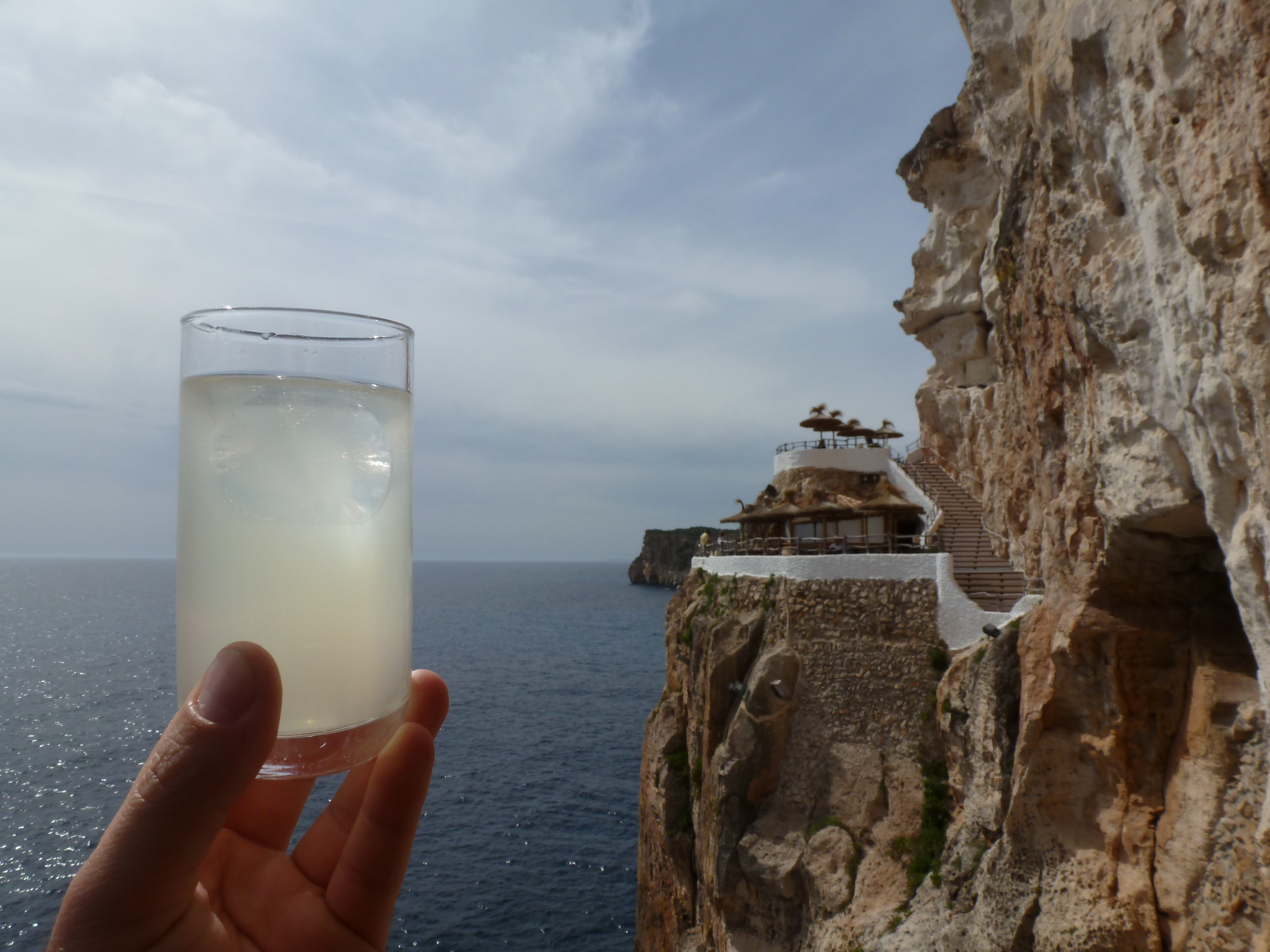
7. XORIGUER GIN — Speaking of gin, a bottle of this Menorcan beauty cost me only 12 euro, a smashing deal considering the flavor it packs. Sipped neat at room temperature, the gin didn’t feel silky smooth, but it tasted wonderfully complex, with notes of juniper, anise, rose, white pepper and even incense. What a shame this gin isn’t yet available in the U.S.! Hopefully that will change in 2013.

6. MIRTO — I found this digestif on another sensationally scenic Mediterranean island, Sardinia. Made from local myrtle berries, the mirto I brought home tasted of ripe cherries, something herbal, like eucalyptus perhaps, and cinnamon on the finish. It was positively delightful, both at room temperature and chilled (how it’s usually served). And it made some thoroughly delicious cocktails.

5.  — I couldn’t believe my eyes when I saw this cocktail on the menu at the Four Seasons Chicago. It contained Crème Yvette, a violet-based liqueur that hadn’t been produced in the last 50 years. But there it was, coelacanth-like, in the A², a concoction of Journeyman W.R. Whiskey, Crème Yvette, yuzu juice (a small grapefruit-like fruit) and Luxardo Maraschino Liqueur. The cocktail had an aroma of purple grapes, a strong, fruity flavor with some tangy citrus notes, and a dry, floral finish. A well-balanced and elegant drink.
4. FLOR DE CANA 18-YEAR CENTENARIO GOLD — This gorgeous Nicaraguan rum sucked me in with aromas of vanilla cake and brown sugar and sealed the deal with flavors of vanilla, oak and orange peel. Very rich, with a finish that went on and on.

3. BIJOU — Even if it served merely middling cocktails, the Ranstead Room in Philadelphia would still be worth a visit for its speakeasy-like location and sexy decor straight out of a Mad Men episode. But add in spectacular cocktails crafted with meticulous care, and you have a bar that alone makes a journey to Philly worthwhile. My bartender stirred up a Bijou, a wonderfully smooth mix of Beefeater Gin, Green Chartreuse, Dolin Blanc Vermouth and lemon zest. The aromatics of the gin, the herbaceous bitterness of the Chartreuse, the touch of smooth sweetness from the vermouth — it came together like a flavor symphony.

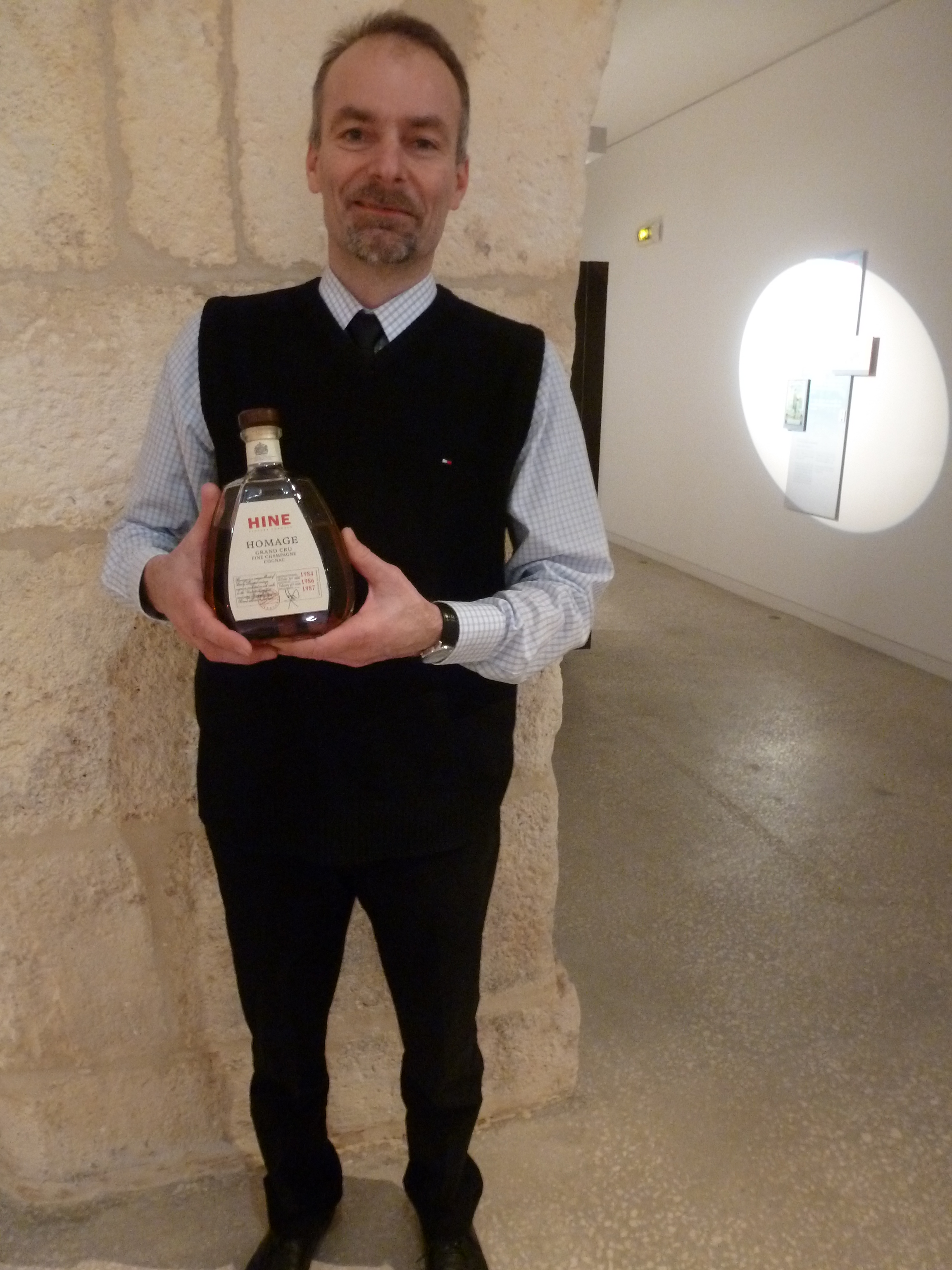
2. HINE TRIOMPHE — So beautiful was this blend of Grande Champagne Cognacs averaging around 50 years old, with extraordinarily velvety caramel and tobacco flavors, that it brought tears to my eyes. Cellar Master Eric Forget, seeing my reaction, quietly remarked, “It’s not a Cognac. It’s just a pleasure.” Indeed.

1. HENNESSY PARADIS IMPERIAL — This remarkable Cognac also reduced me to tears. Only this time, it was in front of the Cognac Summit’s videographer, camera rolling! Embarrassing, yes, but anyone who has tasted this ambrosial liquid can understand my emotional response. It was a sublime moment, tasting something so profoundly exquisite in so lovely a setting as Hennessy’s Château de Bagnolet. I learned later that the Paradis Impérial blend contains Cognacs dating from the 19th century. I drank liquid history! It’s humbling to think about all the work — and all the waiting — that went into producing that glass of Cognac.

Next up: My Top 10 Wines of 2012
Worth Traveling For

15 December 2012
Comments Off on Worth Traveling For

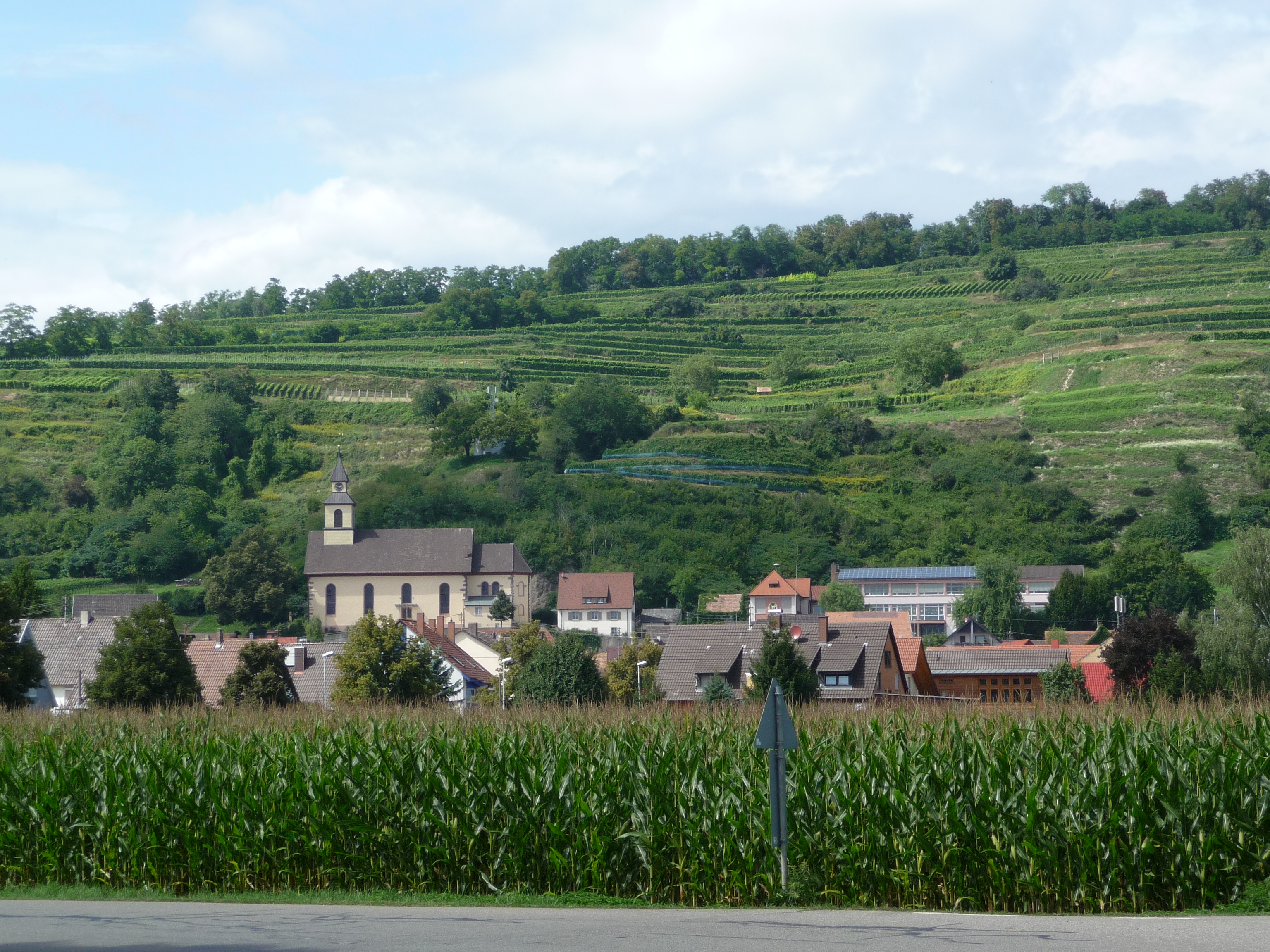
Ihringen

Baden will always have a special place in my heart. This extravagantly beautiful ex-duchy in Germany’s far southwest was the first (and only) wine region where I’ve actually lived. From my base in Freiburg-im-Breisgau, the beguiling capital of the Black Forest, I remember striking out on my bicycle along unpaved paths to villages like Staufen, nestled at the foot of hillside vineyards leading up to a ruined castle. Some friends and I even biked across the Rhein River to Colmar in the Alsace region; I love that my first entry into France was by bicycle rather than airplane.

Some of my Mitstudenten gathered for a 10-year reunion in Freiburg back in 2009, and in between visits to our dorms and a favorite Biergarten or two, we took a train to Ihringen, an important wine village in the Vulkanfelsen (“volcanic cliffs”) section of the Kaiserstuhl, just across the river from the Alsace. This is a “first-class wine district,” according to The Sotheby’s Wine Encyclopedia, and indeed, we tasted some lovely things at Wasenweiler, a cooperative winery we toured.

Despite Baden’s many fine wines, there’s a very good chance you’ve never actually tasted anything from this region. Even Binny’s, one of the largest wine stores in the country, carries precisely zero wines from Baden. Because of the marketing success of the massive Zentralkellerei Badischer Winzergenossenschaften (ZBW), almost all exports out of Baden are “well-made, but rather basic, characterless wine,” as the Encyclopedia notes. But an array of smaller producers makes very high-quality wines, as the Encyclopedia and I agree, and it’s a shame we can’t find them outside of Germany (or even outside Baden, for that matter).

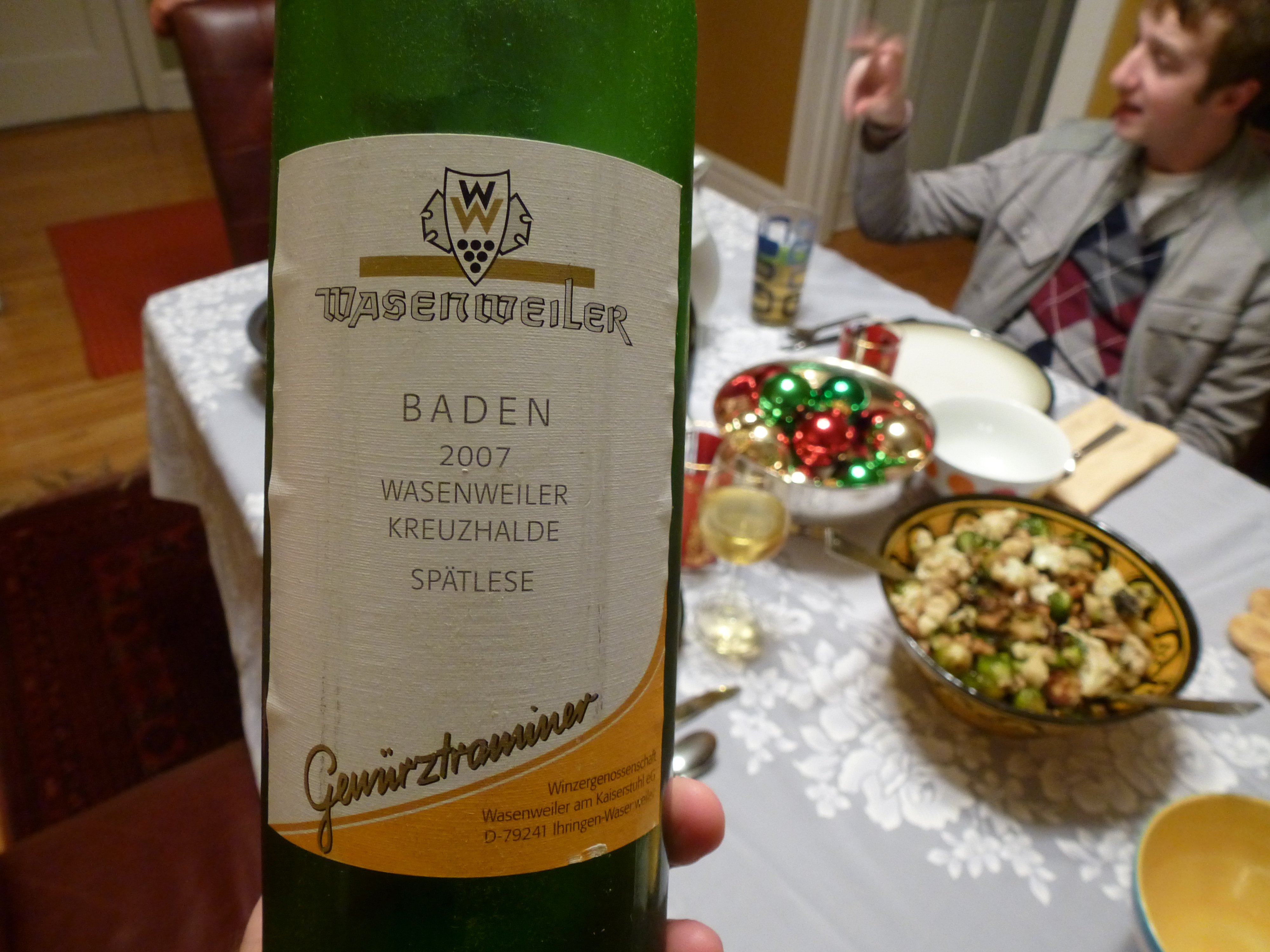
I brought back one bottle from Wasenweiler, a 2007 “Kreuzhalde” Gewürztraminer Spätlese. It’s quite a mouthful, both in terms of pronunciation and flavor. “Kreuzhalde” is the name of the specific vineyard, a hilly, sunny site that requires harvesting by hand (you can see a photo here). “Spätlese” refers to the level of the fruit’s ripeness at the time it was picked, as measured by the amount of sugar in the grapes. It translates basically as “late harvest,” but it falls in the rough middle of the scale, between Kabinett and Auslese. And Gewürztraminer is the wonderful grape variety, which The Oxford Companion to Wine calls “Deeply colored, opulently aromatic and fuller bodied than almost any other white wine.”

And so it was. The Wasenweiler looked honey-gold in the glass, and the aroma! A heady honeysuckle perfume. But my worries that this wine had aged too long were only finally dispelled when I gave it a try. The acids remained mostly intact, ensuring balance and liveliness. It tasted exotic and spicy, with flavors of ripe pear, cinnamon, ginger, jasmine and incense, yet it was surprisingly dry. It stood up quite well to a dinner of vegetarian choucroute (sauerkraut cooked with veggies, spices and wine) and Käsespätzle (noodle-like dumplings with caramelized leeks, butter and Emmentaler cheese).

What a wonderful reminder of that sunny day in Ihringen, when we got semi-lost on the way to the winery and wandered for a while along vineyards and well-tended gardens. Maybe it’s not such a bad thing that wines from Baden are so hard to find. Now, whenever I have the chance to drink one, it’s a truly special experience, bringing me right back to that glorious piece of German countryside. It makes me hunger for a return trip, and it reminds me how lucky I am to have lived there for a time.

And somehow, it’s reassuring to know that there are still some things you can get only by traveling to the source.

Experimenting With Eggnog

12 December 2012
Comments Off on Experimenting With Eggnog

In all probability, eggnog with a little brandy was the first cocktail I ever tried. I was, after all, only 10 or 11 when my dad first presented me with this nectar, just before we opened gifts at Grandpa’s house on Christmas morning.

I still indulge in gloriously fatty, sugary eggnog each year, adding a touch to my morning coffee, or spicing it up with a splash of Cognac in the evening, should I be feeling extravagant.

But is this really the best way to enjoy eggnog? Could my eggnog pleasure be yet further increased? The possibility seemed remote, and yet too enticing to ignore. I got to work.

First, it’s important to choose the right eggnog. For my money, the most sumptuously thick comes from Oberweis, a local dairy. Should Oberweis be unavailable, choose an organic eggnog, made with real yolks and spices, rather than processed fat and artificial flavors.

A good eggnog can stand up well to a variety of different spirits, which means you can use whatever your favorite booze may be, and the drink will still turn out basically all right.

Whichever booze you choose, proportions are key. A 1:1 eggnog/booze ratio yields a perfectly delightful and very adult cocktail, but when I drink eggnog, I want the full fatty luxuriousness to envelop my palate. For me, a 2:1 ratio of eggnog to booze afforded a balanced drink that remained lusciously thick in texture.

If you have particularly thick eggnog, the booze likely won’t incorporate immediately. I recommend stirring, either in a pitcher or in the glass, rather than shaking in a shaker. Shaking the eggnog aerates it, and I want that thick texture intact. And worse, if you use ice in the shaker, you’ll end up diluting the nog. Not acceptable. The eggnog should be cool enough that you don’t need to use any ice. If it’s important to you that the drink be truly cold, put the booze in the freezer for 30 or 40 minutes before you plan on drinking.

I tried mixing eggnog with a variety of different spirits, and while none of these combinations proved to be offensive, some worked better than others. I used a 2:1 ratio in all cases, unless otherwise noted:

With Brandy: A classic combination. With no basic brandy on hand, I used Remy Martin VSOP Cognac, and it worked predictably well. But this was not my favorite combo. The vanilla and caramel flavors in the Cognac were too close to the flavors in the eggnog, making the cocktail a little one-note.

With Tequila: Unorthodox but successful. I used El Jimador Reposado tequila, and the result had a surprisingly dry finish, even with just a hint of smoke. I rather liked it even better than with the Cognac!

With Rum: Another classic combo, except that I used a Rhum Agricole clocking in at a touch over 100 proof. The bright, sharp finish might be a bit strong for some, or just right for others. It gave me an idea. Why not try eggnog…

With Bacardi 151: I keep this rum, with its unholy 75.5% alcohol content, on hand mostly because it’s so easy to ignite. In this case, it proves exceedingly useful because you can add half the amount and get the same alcoholic kick. With a 4:1 eggnog/Barcardi 151 ratio, you have an eggnog cocktail with unparalleled thickness of texture.

With Coffee Liqueur: Since I do enjoy a little eggnog in my coffee, I assumed a little coffee liqueur in my eggnog would taste just as good. I was wrong. It tasted simple, caramelly and way too sweet. It was dessert, not a cocktail. I couldn’t drink more than two sips. If you’re determined to go this route, make it more of a White Russian, using 1 part coffee liqueur, 2 parts vodka and 5 or 6 parts eggnog.

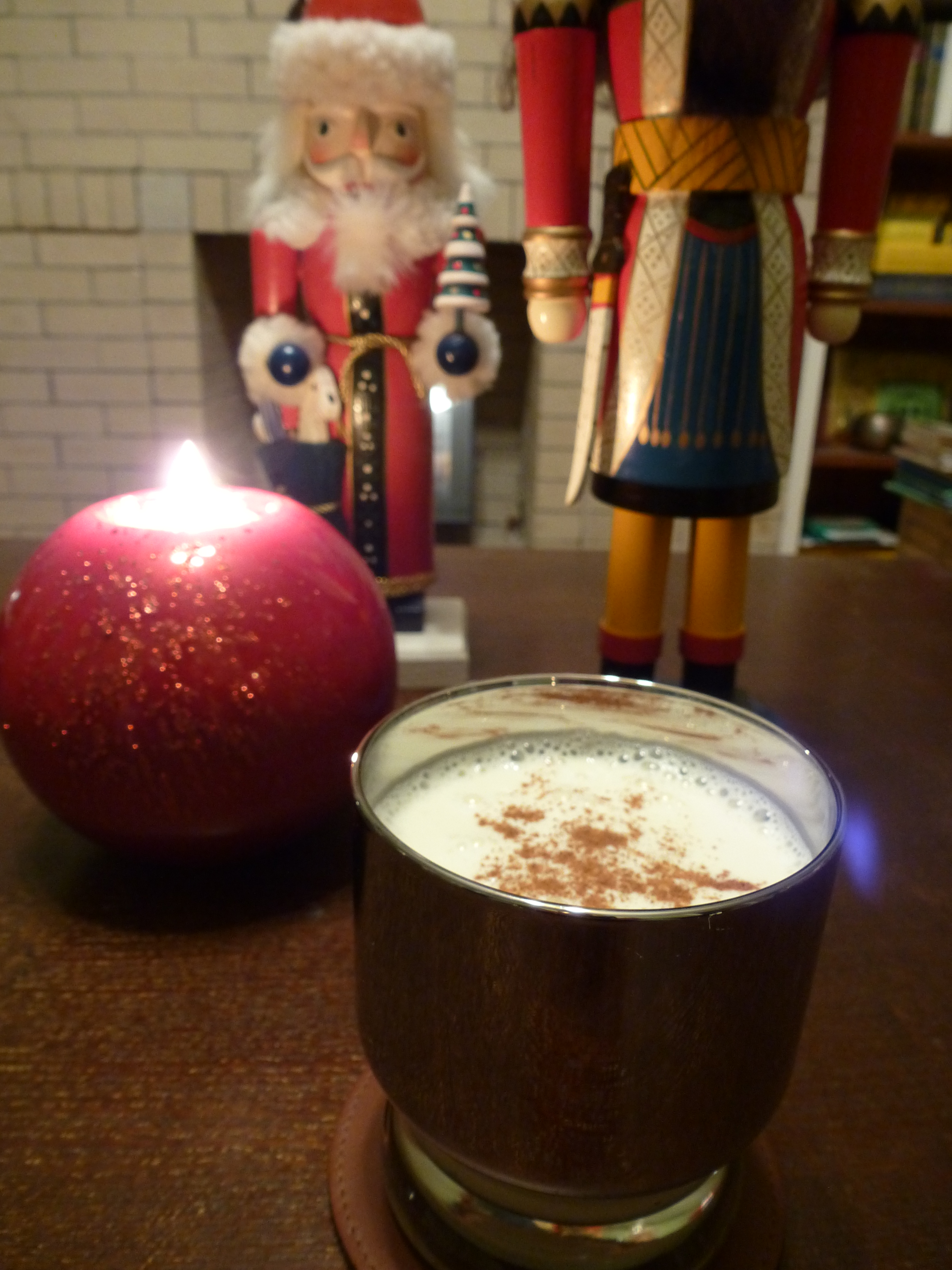
With Bourbon: My favorite combo of all. Again, I seemed to be out of inexpensive bourbon — all I had was some delicious Rowan’s Creek. I used it in this cocktail only reluctantly, assuming its flavors would be completely lost, as the Cognac’s flavors were. But what a delight! After the initial wave of eggnog flavor, I detected something herbaceous underneath. Then as the eggnog faded away, the bourbon really came to the fore, making for a wonderfully delicious finish. A memorable journey, and one I suspect I’ll be repeating many times between now and Christmas. It’s worth trying with whatever bourbon you may have on hand.

———

I also spent some time working up a more complicated cocktail, because after all, I wouldn’t be Odd Bacchus if I didn’t want to complicate matters just a little. I wanted to complement the nutmeg and cinnamon in the nog, and I hit on the idea of using orange and ginger, two similarly warm flavors. After noodling around with the proportions, I came up with a marvelous concoction I like to call:

SANTA’S HELPER

–4 parts Bourbon (I used Rowan’s Creek)

–1 part Triple Sec (Stirrings makes an “all natural” version of this orange-flavored liqueur)

–1 part Ginger Liqueur (A number are on the market, but Stirrings’ is much less expensive than most others)

–9 parts Eggnog (1.5 times as much alcohol)

Pour all the ingredients, ending with the eggnog, in your glass or a pitcher. Stir to combine, and serve in a lowball or rocks glass. Do not use ice at any point in the process. The eggnog, orange, ginger and bourbon all have their moment on your palate, making for a delicious and surprisingly complex journey.

It’s traditional to top your eggnog with some freshly grated nutmeg, but that’s a pain, and there’s already plenty of nutmeg in most store-bought eggnogs. I prefer a little cinnamon powder on top of my nog. If you want to get fancy, top your eggnog with a touch of cinnamon and a sprinkle of ginger powder. Even fancier, top with a bit of ginger powder and garnish with a whole cinnamon stick.

Cheers!

What The Heck Is Going On Here?

8 December 2012
Comments Off on What The Heck Is Going On Here?

Although many of my posts touch on the reasons why I gravitate towards the unusual and the obscure, I realize I’ve never distilled (if you will) the purpose of this blog in a single, concise post. So:

Why am I making such a fuss over the unusual and the obscure? I touched on the most practical reason in this post: Value. As wine writer Lettie Teague noted in a recent column for The Wall Street Journal, “The obscure and the uncurated will almost always cost less than the well known and well placed. If you don’t know what a wine is, you’re unlikely to pay a high price for it.”

I am constantly in search of good wine values, and most of the wines I describe on this site pack a lot of flavor for the price. Like most people, I’m on a budget, and usually I want tasty wines that cost $15 or less. But it can be daunting to weed through the huge array of inexpensive unusual wines. It’s my goal to single out the wines that are not merely unusual, but unusual and delicious. Because it can be difficult to find a specific wine if you’re not shopping in exactly the same stores I am, I try to highlight entire regions and wine varieties to watch out for whenever possible.

As important as price is to me, there is another reason much dearer to my heart: Sticking up for the little guy. By definition, most of the wines and spirits I write about are made by small producers without big marketing budgets. For just about all these winemakers and distillers, I suspect their work is a labor of love, and I like to think that’s something you can taste. Most of us would surely much rather drink something made with real heart than something concocted in a lab, but too often, we’re afraid to leave our comfort zones and try something new. Drink fearlessly, my friends! You’ll discover some incredible stuff, and you’ll be helping small businesses.

You’ll also strike a blow against flavor homogenization, helping ensure that the vast world of wine and spirits available to us today continues to be gloriously, wonderfully diverse. And what fun it is, at least for me, to learn about all these fascinating little nooks and crannies which are making tasty wines and spirits. Taste and smell are two of our most powerful senses, and every now and then, a drink transports me right back to its home, or even back in time. Bottles of something unusual and obscure almost always come with a great story.

Some of you may also be wondering: Why wines and spirits? Most blogs focus on either just wine or just spirits/cocktails. That keeps things nice and tidy, but that’s not how most people I know drink. To be sure, there are some of us who only drink one type of alcohol, but if you’re like me, sometimes you want some wine, sometimes you want a cocktail, and sometimes you want a beer. (I don’t write about beer, because, well, I had to draw the line somewhere.) I see no reason to deny ourselves the pleasure of mixing it up, and I want this blog to be somewhere you can go whenever you’re in the mood to taste something new and different.

So as you’re doing your shopping, consider picking up something unusual and obscure to bring to that holiday party or give your friends as a Christmas present. (My top gift picks are listed here.) Seek out a bottle of cheer with a story, crafted with love, rather than just another bottle of booze made in a factory.

« Previous PageNext Page »