Mixology Mishaps

5 December 2012

‘Twas the night before a blog deadline, and all through the bar, Odd Bacchus was stirring some cocktails bizarre.

The booze was poured in the shaker with care, but the result would only be drunk on a dare.

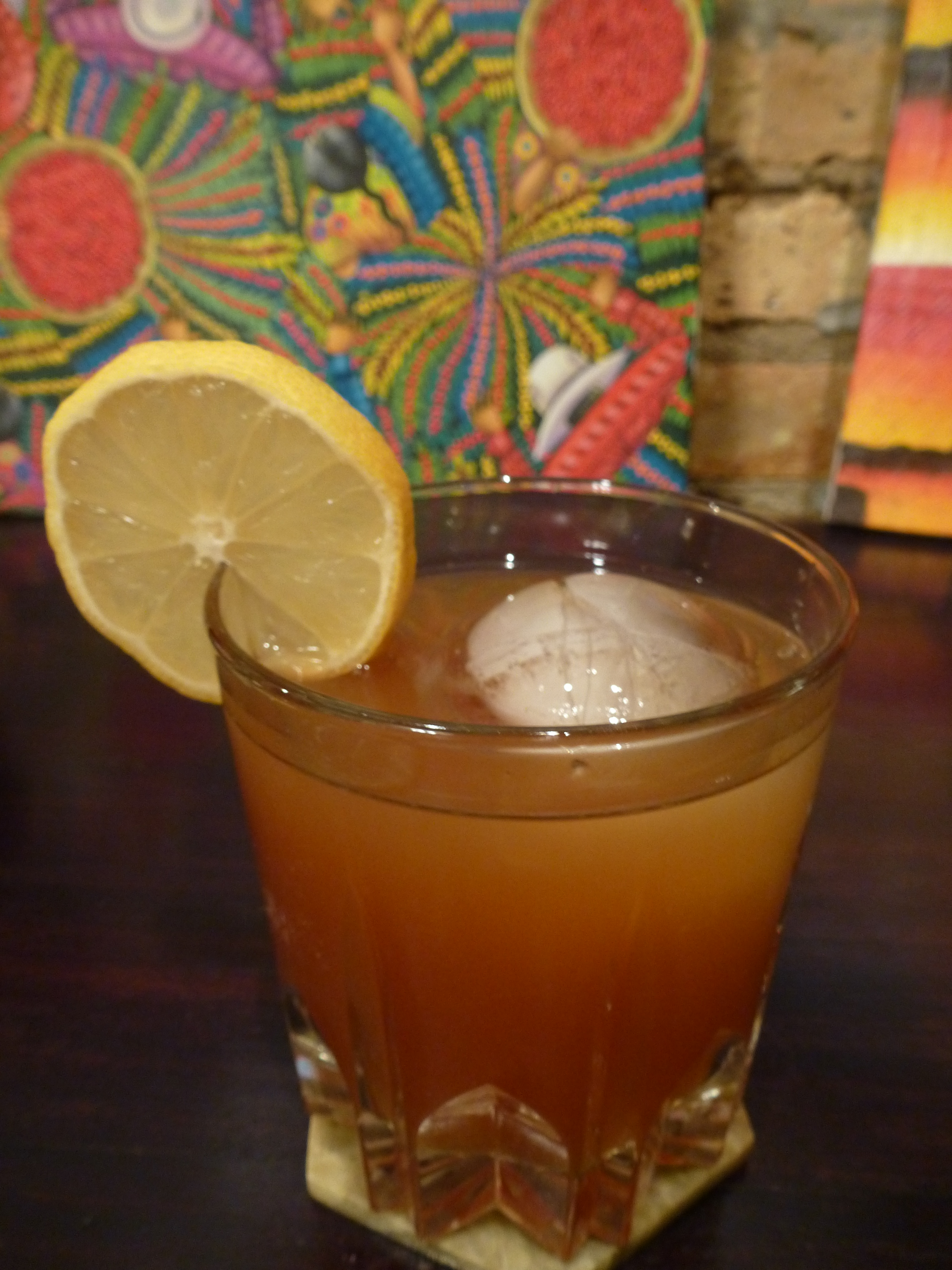
Being a seasonal kind of guy, I planned on extolling the virtues of the Chimayó in this blog post. This cocktail, first brought to my attention by former Wall Street Journal cocktail columnist Eric Felten, combines tequila, unfiltered apple cider, crème de cassis (black currant liqueur) and fresh-squeezed lemon juice. I had all the ingredients on hand, and what could go wrong?

Well, something unpleasant happened between the shaker and the glass, because lovely though this cocktail to the right may look, it tasted like sour menthol smoke berries. My theory is that the gold tequila I used was inappropriate for this drink, and that silver might suit it better. But who knows? I am bereft of silver tequila at the moment, and Mr. Felten doesn’t specify the type of tequila in his article. Come on, Eric! I expected more from you.

Having completely failed at making a palatable Chimayó, it was time for Plan B. I took out a jar of vodka I’d infused with lemon-thyme, a wonderful herb a coworker gave me from her garden. Doesn’t that sound tasty? I poured a little in a glass and took a whiff. “Lemon Pledge” was the first thing that came to mind. A sip confirmed it: I’d made a jar of Lemon Pledge vodka.

Determined to salvage this unfortunate infusion, I tried mixing it with the unfiltered apple cider, a bit of lemon juice and some crème de cassis. Lemon and black currant can go really well together, and since this was a modified version of Felten’s Chimayó recipe, I had high hopes. My optimism proved to be unfounded, however. This cocktail, despite its entirely natural set of ingredients, tasted like chemical lemon candy and purple. Yes, its flavor was revolting enough to induce momentary synesthesia.

With single-minded but sadly misguided zeal, I soldiered on and made one more attempt to create something someone — anyone — might want to drink. I simplified the recipe, using just the lemon-thyme vodka, lemon juice and crème de cassis. The result stunned me with the sheer power of its noxiousness. How could so simple and natural a drink be so overwhelmingly disgusting? I gingerly tried another sip. Indeed, there was no denying the abhorrent flavor, an abomination which I took to be some sign of the End of Days. I spat it into the sink, followed by a spew of unholy expletives unprintable in a blog viewable by the general public.

Although I discovered no new cocktails to recommend on this blog, I did develop a new-found respect for professional mixologists. Tip your bartenders well, dear readers — their job isn’t as easy as it looks.
An Odd Bacchus Gift Guide

1 December 2012
Comments Off on An Odd Bacchus Gift Guide

If you, like me, have only just begin to contemplate making your holiday shopping list — let alone actually buy anything — do not despair. If your circle of family and friends, like mine, contains quite a few drinkers, all you need to do is make one trip to your favorite local wine/spirits shop, with this list in hand.

I’ve suggested mostly regions or categories of wines and spirits, rather than specific brands, so that you’ll have a better chance of finding them. The links go to fascinating, beautifully composed blog posts with additional information:

ODD BACCHUS’S TOP 10 GIFTS FOR THE HOLIDAYS:

(In no particular order)

1. If you’re buying a gift for someone who really knows their wine, someone you would like to impress, a Grower Champagne is an ideal choice. Produced (theoretically) by the people who grew the grapes in specific vineyards, this Champagne will likelier reflect its terroir more than a Champagne made by a négociant, which buys grapes from an array of vineyards in the Champagne region. A Grower Champagne will be indicated by “RM” (Récoltant Manipulant) on the label, usually in very small type, as opposed to “NM”, which stands for Négociant Manipulant.

2. One of the best white-wine values out there is Savennières, a Chenin Blanc produced in the Loire Valley. Haven’t heard of it? That’s one of the reasons it’s such an excellent value.

3. Another excellent white choice would be a wine from Pessac-Léognan, a sub-region of Graves, which is a sub-region of Bordeaux. “Pessac-Léognan” may not roll right off the tongue, but its luscious tropical flavors and voluptuous texture will thrill the palate. This was probably my favorite white I drank this year.

4. A less-expensive but still-delightful gift would be a Furmint from Hungary. I just had a very fine example a couple of nights ago at Big Jones, with up-front pear flavors followed by a spicy, almost fiery finish. It works beautifully with a range of foods, and typically doesn’t cost all that much. If you have a bigger budget, go for some Tokaji Aszu, the justly renowned Hungarian dessert wine (the more “Puttonyos,” the more concentrated the flavor).

5. One of my favorite odd red wines of the year was St. Laurent (pronounced “Sahnkt Lorent”) from Austria. This variety tends to make rather sexy wine, with dark red fruit, velvety tannins and a touch of earth.

6. Good wines from famed Tuscany tend to be rather expensive, but Morellino di Scansano has yet to be discovered. These Sangiovese-based wines from a corner of the nearby Maremma region tend to be better values than their Tuscan cousins. The one I tried had deep, enticing fruit and some real finesse.

7. I’ve had great experience with Massaya, a well-regarded winery in Lebanon’s Bekaa Valley. Its wines made quite an impression on me, both red and white. If your wine shop carries vintages by Massaya, don’t pass them up.

8. For the spirit drinker, you can hardly go wrong with Ron Zacapa, a fine rum from Guatemala. Smooth and complex, this rum is made for sipping, not mixing with Coke. Go for as old a rum as you can afford.

9. If you don’t find Ron Zacapa, look for Flor de Caña instead. This Nicaraguan rum also impressed me with its refined character and rich flavors.

10. For the mixologist who has everything, seek out Crème Yvette. This floral, violet-based spirit  went out of fashion in the 1960s, and when it stopped being manufactured in 1969, it looked to be lost forever. But production was restarted in 2009, and once again, we can mix proper Aviations and Blue Moons. Not inexpensive at about $50, but sure to impress.

Happy Shopping!

A Thoughtful Gift

28 November 2012
Comments Off on A Thoughtful Gift

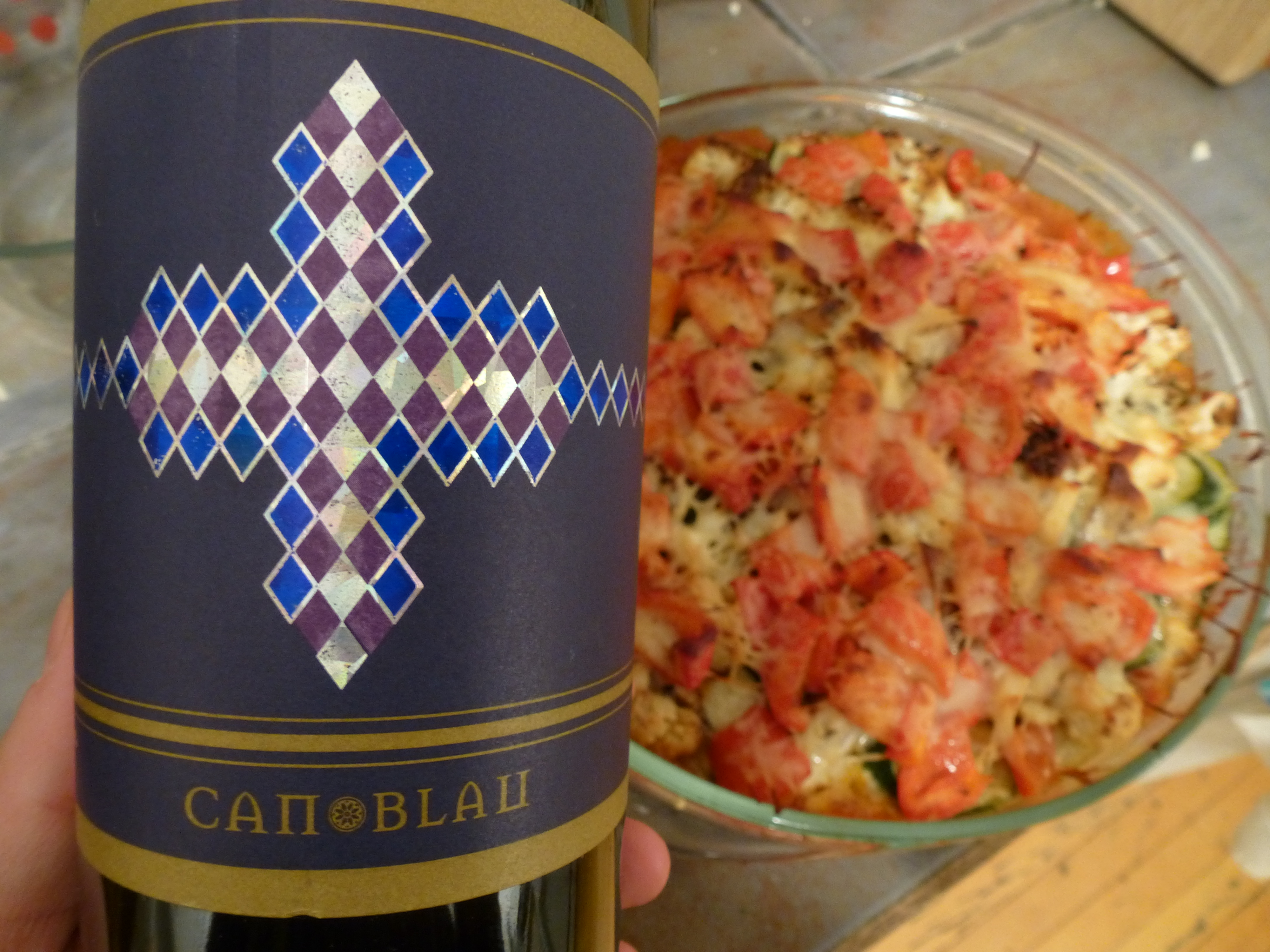
Not too long ago, my friend Will brought over a bottle of wine, and he chose something right up my alley. Knowing my preference for the unusual, he purchased a 2009 Can Blau Montsant, a blend of 40% Mazuelo, 40% Syrah and 20% Garnacha (Grenache).

What? A Mazuelo-based blend from Montsant?? Be still my obscure heart!

The Montsant D.O. (Denominación de Origen), I discovered, came into being only in 2001. It was carved out of the Tarragona D.O. in Catalonia, Spain, in order to “highlight its superior quality,” according to The Oxford Companion to Wine. It can apparently produce wines “similar in style and quality” to those crafted in neighboring Priorat, which is pretty high praise as far as I’m concerned. And it’s no surprise. According to the map in The World Atlas of Wine, the Can Blau winery is barely a kilometer outside the Priorat region. So close!

Now, Syrah and Garnacha I’ve heard of and sampled, but Mazuelo? Well, it turns out I’ve tried that too — “Mazuelo” is the term people in Rioja use for Carignan (also spelled “Carignane”). But why a winery in Monstant would label its wine with a term from the Rioja region instead of the locally used “Cariñena” is a mystery. Or is it?

I realized that though I’d tried wines made from Carignan before, I didn’t know all that much about the grape. I read the entry about it in the Companion, and it began to make sense why Can Blau wouldn’t necessarily be anxious to announce the Carignan component in its wine. The Companion praises old Carignan vines, but calls the variety in general “the bane of the European wine industry…distinguished mainly by its disadvantages.” Varietal wines from this rot-prone grape tend to be “high in everything — acidity, tannins, colour, bitterness — but finesse and charm.” Which boils down to wines that are too rough to drink young but are also “unworthy of maturation.” Ouch.

But if late-ripening Carignan is going to do well anywhere, it seems, it’s in sunny Catalonia. I have no idea how old the Carignan vines of Can Blau are (the website of its parent company is only in Spanish), but I suspect the Companion might not entirely approve. The wine was big and a little unpolished, but it was great with a bowl of hearty vegetable gratin on a cold Sunday evening. An appealing deep magenta, the Can Blau had fragrant aromas of jam and vanilla. On the palate, it started with a zing of black pepper before moving on to dark fruit, big rustic tannins and expansive acids. It finished with some sweet notes; a bit of anise and a quick reprise of vanilla.

Well, I suppose this wine didn’t exactly scream “finesse!” It was more of a robust farmer than a refined city type, but I very much enjoyed it nevertheless. After all, robust farmers can be a lot of fun every now and then.

SUMMARY

2009 Can Blau Montsant: Big, fragrant, fruity and a little rustic. This wine might be a little much for some tastes, but I thought it was great fun. Chill in the refrigerator for 20 minutes before serving.

Grade: B

Find It: Binny’s carries the 2010 vintage for $16, which is not at all a bad deal considering the wallop of flavor this wine packs.

Thankful For Wisconsin Wine

24 November 2012
Comments Off on Thankful For Wisconsin Wine

I am thankful for so many things, most of which don’t really relate to this blog. But one thing I can write about here is that I’m thankful that nowadays, tasty wines are being made all over the place. Americans have become much savvier wine consumers, demanding higher quality, and entrepreneurs have set up wineries in all 50 states. Ever more countries have discovered what unique combination of terroirs and grape varieties work for them. I am thankful that in all of known history, there has never been a time when so much fine wine from so many different places has been available at such affordable prices.

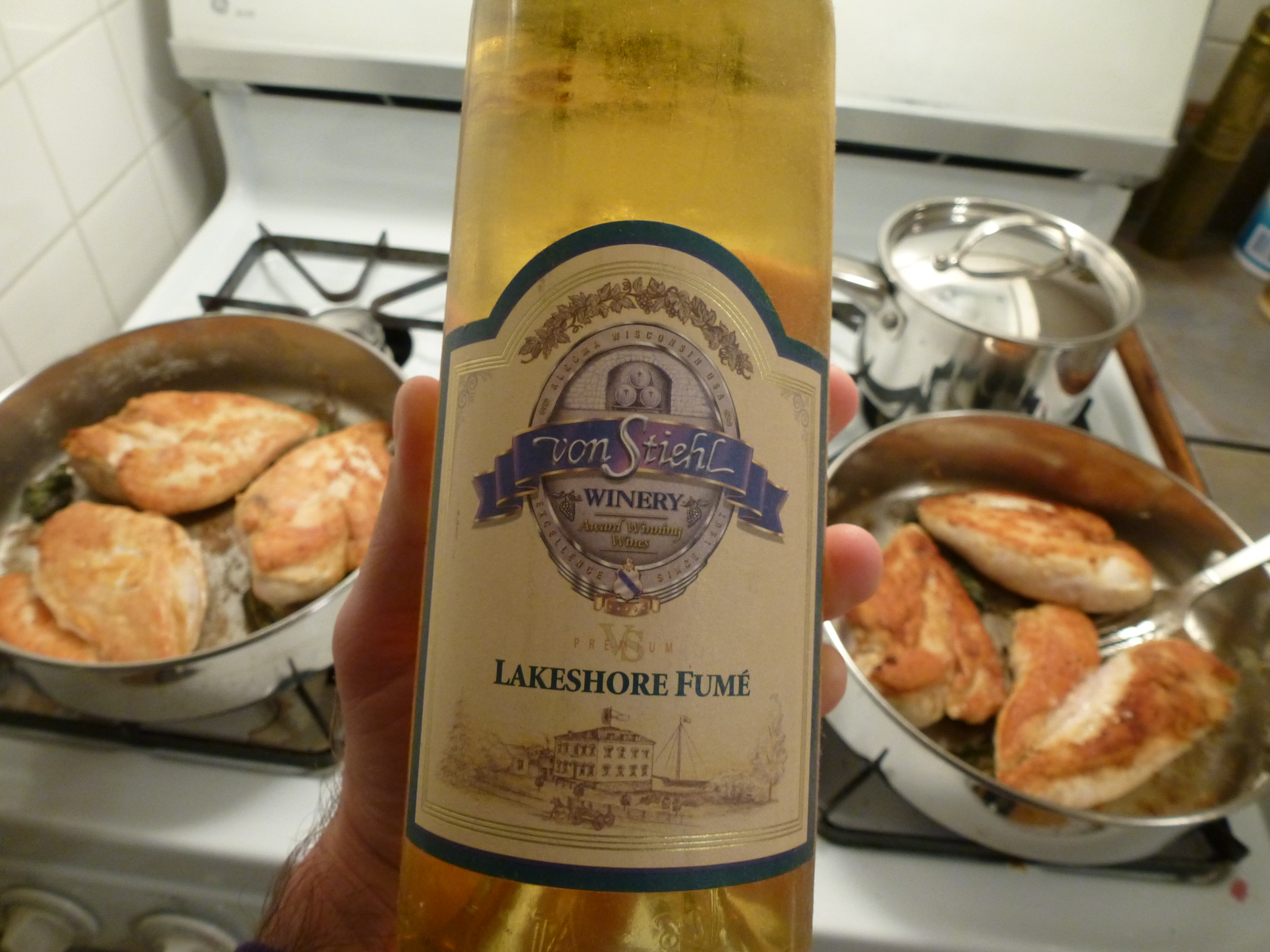
One winery I’m thankful for is Von Stiehl, in the lakeside town of Algoma, Wisconsin, where I had a memorable tour and tasting led by a former cast member of Hee-Haw. I wrote about Von Stiehl’s well-made Cabernet Sauvignon in this post a little while back, but I also brought home another bottle from that visit: A non-vintage Von Stiehl Lakeshore Fumé.

This wine is not actually a “Fumé Blanc,” a somewhat indeterminate style of Sauvignon Blanc invented in the 1970s by Robert Mondavi involving some oak aging. Von Stiehl made this wine with Seyval Blanc, a French hybrid which is “productive, ripens early and is well suited to relatively cool climates,” according to The Oxford Companion to Wine. It sounds ideal for a Wisconsin winery. But because it has some non-vinifera relations, you’re unlikely to find any wines labeled as Seyval Blanc in its home country. Europeans always have been rather intolerant of those lacking respectable lineage.

In any case, I liked this Seyval Blanc enough to buy a bottle and cart it home. Unfortunately, it then remained on my wine rack for years, essentially unprotected from Chicago’s hot summers. I decided it was high time to open this half-forgotten bottle, because it would surely gain nothing from aging any further. So while making a batch of chicken saltimbocca with roasted Brussels sprouts, carrots and sunchokes, I cracked it open and hoped for the best.

The wine had deepened in color, turning a rich gold, and it had some pineapple in the aroma. I was relieved to smell fruit instead of mildew, dung, or nothing at all. It actually reminded me of a light Sauterne, with some woodsiness and tropical fruit, but it was but a shade of this noble French wine at this point. The fruit felt a bit flabby. Some acids remained, especially in the first 15 minutes after the wine was opened, but they started to dissapate thereafter. The wine became too white-grapey, and flab replaced what was once surely some lively fruit.

I enjoyed the first intriguing glass, but the rest of the bottle just didn’t make it. I had waited too long, and once again, a fine bottle of wine died a slow, silent death on my wine rack.

Maybe it’s time to be thankful for the wines I already have in my collection, and open the rest of the older wines now, before they too suffer a similar fate.

SUMMARY

NV Von Stiehl Lakeshore Fumé: Originally surely well-balanced with lively acids, tropical fruit and a touch of wood, this wine didn’t age all that well. The acids decayed, and the wine became flabby. A fine choice, but drink it soon after purchase.

Grade: I can’t really give this wine a fair assessment.

Find It: Von Stiehl now sells this wine under its “Up North” label as “Tranquility Lookout,” priced at about $13.

« Previous PageNext Page »